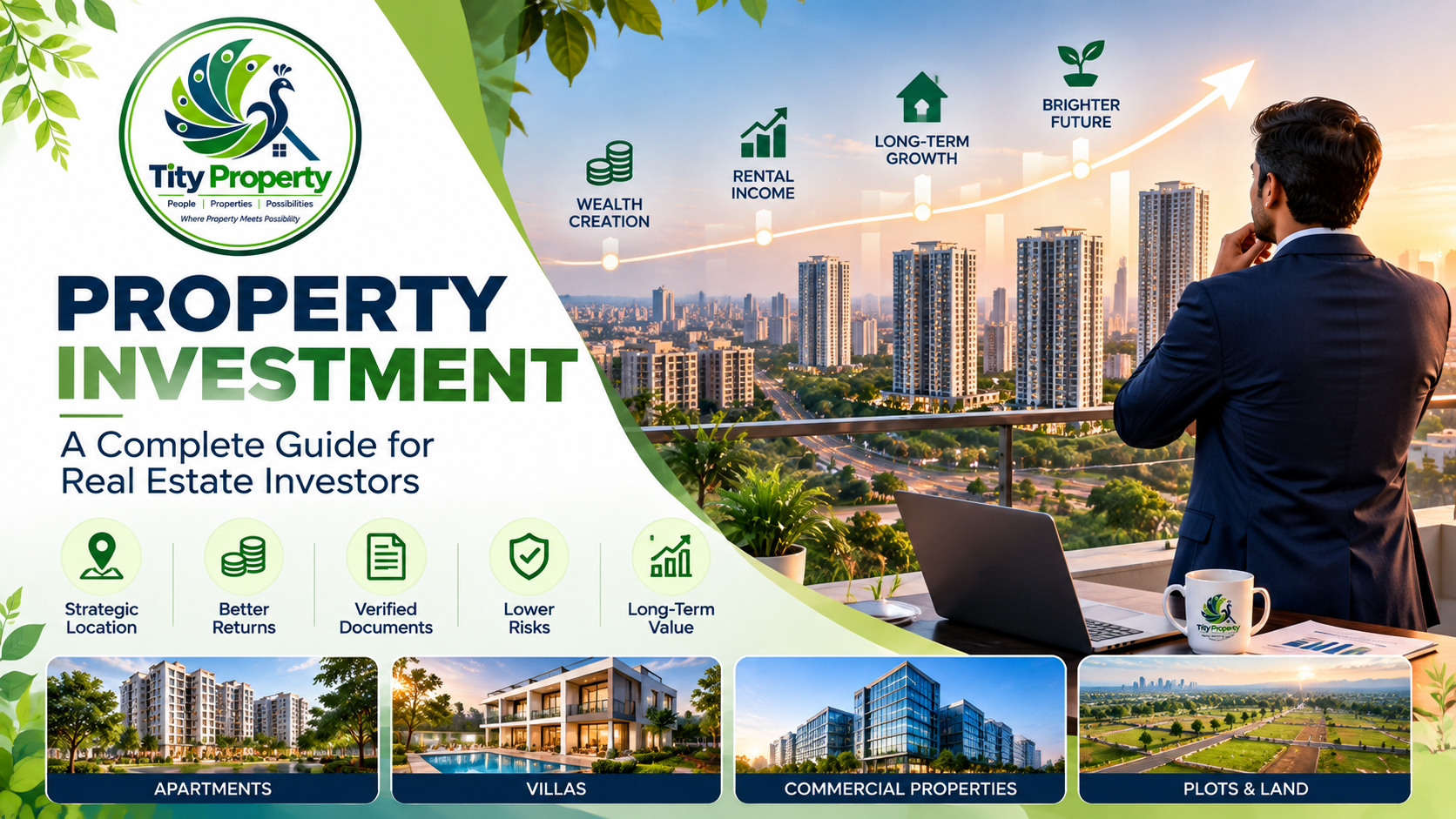
Property Selling: How to Sell Your Property Successfully
Introduction
Selling a property is an important financial decision that requires careful planning, accurate documentation and a clear understanding of the real estate market. Whether you own an apartment, villa, independent house, commercial building, open plot or land, following a structured selling process can help you prepare for the transaction and evaluate potential buyers more effectively.
A successful property sale involves more than finding a buyer. Appropriate pricing, property presentation, document verification, transparent communication and clearly agreed transaction terms all play an important role.
Tity Property helps connect property owners with potential buyers and investors based on their requirements and available property opportunities.
1. Understand Your Property and Selling Requirements
Before offering your property for sale, prepare a clear overview of the property and your selling objectives.
Consider the following details:
- Property Type: Apartment, flat, villa, independent house, commercial property, plot or land.
- Location: City, locality, nearby landmarks and accessibility.
- Property Area: Carpet area, built-up area, plot area or land extent, as applicable.
- Property Condition: New, ready-to-move-in, resale, occupied or requiring renovation.
- Ownership Details: Individual ownership, joint ownership or ownership through a legal entity.
- Selling Objective: Individual property sale, investment exit, portfolio sale or bulk property disposal.
Accurate information helps prospective buyers understand the property and assess whether it meets their requirements.
2. Determine an Appropriate Asking Price
Setting a realistic asking price is an important part of the selling process.
Consider these factors when evaluating the price:
- Recent comparable property transactions.
- Asking prices of similar properties in the locality.
- Property size, layout and condition.
- Location and road connectivity.
- Available amenities and infrastructure.
- Applicable approvals and ownership documentation.
- Current market demand.
- Additional features that may influence buyer interest.
For commercial properties, consider permitted usage, accessibility, building condition and occupancy arrangements.
For plots and land, evaluate the location, recorded area, boundaries, access, classification and applicable approvals.
An independent property valuation may be useful when determining a reasonable asking price. The final sale value will depend on market conditions, buyer interest and mutually agreed terms.
3. Prepare Your Property for Sale
A well-presented property can help potential buyers understand its features and condition.
Before arranging property visits:
- Clean and organise the premises.
- Complete essential maintenance where appropriate.
- Prepare clear, high-quality property photographs.
- Record the property specifications accurately.
- Highlight genuine features and amenities.
- Make relevant documents available for review.
- Disclose known material defects or limitations honestly.
For commercial buildings and larger properties, prepare details about the building area, floor configuration, parking, access and permitted usage, where applicable.
Avoid publishing unverified claims about approvals, ownership or expected investment returns.
4. Organise the Required Property Documents
Documentation is an essential part of a property transaction. Prospective buyers may request records to verify ownership, understand the property's legal status and assess whether the sale can proceed.
Depending on the property and transaction, relevant documents may include:
- Sale deed and ownership documents.
- Previous title documents and ownership history.
- Encumbrance information.
- Property tax receipts.
- Approved building plans and applicable permissions.
- Occupancy or completion documentation, where applicable.
- Land records and survey details.
- Association or society documents, where relevant.
- Loan closure documents or lender consent, if applicable.
- Identity and authorisation documents of the seller.
The documents required will vary according to the property type, location and applicable laws.
Important: Consult a qualified property lawyer to identify and verify the documents required for your specific transaction.
5. Present Your Property to Potential Buyers
A professional property listing should provide clear, accurate and relevant information.
Include:
- Property type and location.
- Asking price or expected price range.
- Property area and configuration.
- Current condition and availability.
- Amenities and accessibility.
- Clear property photographs.
- Ownership and approval information, where verified.
- Contact details for enquiries.
Present the property through suitable property platforms and relevant buyer or investor networks.
At Tity Property, owners can share their property details for consideration and potential connections with interested buyers or investors. Buyer interest and transaction outcomes depend on the property, market conditions and individual requirements.
6. Arrange Property Visits
Property visits allow potential buyers to assess the property's condition, location and suitability.
Follow these steps:
- Understand the buyer's basic requirements.
- Confirm a convenient date and time.
- Ensure the property is accessible.
- Keep relevant property details available.
- Answer questions accurately.
- Explain known limitations or conditions.
- Record feedback and follow-up requirements.
For vacant land, ensure that the location and boundaries can be identified clearly. A qualified surveyor may be required to verify the land extent or resolve discrepancies.
For occupied properties, coordinate visits in advance and respect the occupants' privacy.
7. Evaluate Offers and Negotiate Professionally
When a buyer makes an offer, evaluate the complete proposal rather than focusing only on the purchase price.
Consider:
- Offered price.
- Payment schedule.
- Financing requirements.
- Proposed completion timeline.
- Conditions attached to the offer.
- Outstanding property loans or liabilities.
- Responsibilities for applicable charges.
- Possession and handover arrangements.
Negotiate professionally and ensure that important terms are recorded in writing.
For significant transactions, seek appropriate legal and financial advice before accepting binding terms.
8. Complete Due Diligence and Finalise the Sale
Before completing the transaction, ensure that the relevant checks and agreed conditions have been addressed.
A typical completion process may involve:
Step 1: Verify ownership and relevant property records.
Step 2: Review applicable approvals and legal requirements.
Step 3: Resolve identified documentation discrepancies, where possible.
Step 4: Finalise the purchase price and payment conditions.
Step 5: Have the sale agreement reviewed by a qualified professional.
Step 6: Complete the agreed payment arrangements.
Step 7: Execute and register the required documents, where applicable.
Step 8: Complete possession and document handover according to the agreement.
Stamp duty, registration charges, taxes and other obligations depend on the transaction and applicable laws.
9. Selling Multiple Properties or an Entire Project
Property owners, developers and investors may wish to sell several properties together rather than arrange individual transactions.
Bulk property sale opportunities may include:
- Multiple apartments and flats.
- Several villas or independent houses.
- Entire residential buildings.
- Commercial buildings and office spaces.
- Multiple plots or land parcels.
- Completed projects with available inventory.
When preparing a bulk sale proposal, provide an accurate property inventory, individual and total areas, expected pricing, ownership details, availability and relevant approvals.
Buyers may assess the opportunity based on their acquisition objectives, budget, due diligence findings and transaction requirements.
Tity Property helps facilitate connections between property owners, developers and potential buyers or investors for relevant property opportunities.
Every property and transaction remains subject to independent verification and mutually agreed terms.
10. Common Property Selling Mistakes to Avoid
Unrealistic pricing: Evaluate comparable properties and current market conditions before setting the asking price.
Incomplete documentation: Organise relevant ownership and property records before engaging seriously with buyers.
Inaccurate listings: Ensure that advertised property details match the available records.
Poor presentation: Use clear photographs and provide accurate property descriptions.
Unverified buyers: Exercise appropriate care when sharing documents and discussing financial arrangements.
Unclear payment terms: Record the agreed payment schedule and responsibilities in writing.
Ignoring legal requirements: Obtain professional advice on ownership, agreements, taxes and registration.
Premature commitments: Understand the agreement before signing binding documents or handing over possession.
A transparent and well-documented selling process can help reduce avoidable complications.
11. How Tity Property Can Help Property Owners
Tity Property helps connect property owners, developers, buyers and investors based on their requirements and available opportunities.
Our property-related categories include:
- Residential apartments and flats.
- Premium villas and independent houses.
- Commercial properties and buildings.
- Open plots and land.
- Property investment opportunities.
- Bulk property acquisition and disposal opportunities.
Property owners can share the relevant details of their properties to explore potential connections with interested buyers or investors.
The availability of buyers and the completion of any transaction are not guaranteed.
Frequently Asked Questions
1. How do I start selling my property?
Prepare your property details, ownership documents, photographs and expected selling price. Review the property's legal status before presenting it to potential buyers.
2. How should I determine the selling price?
Compare similar properties, review local market conditions and consider an independent valuation where appropriate.
3. What documents are required to sell a property?
Requirements vary by property type and location. Ownership records, relevant title documents, tax receipts and applicable approvals may be required. Consult a qualified property lawyer.
4. Can I sell multiple apartments or villas together?
Yes. Multiple properties may be offered as a bulk sale opportunity, subject to availability, documentation, buyer interest and mutually agreed terms.
5. Can I sell commercial property or vacant land?
Yes. Commercial properties, plots and land may be offered for sale, subject to ownership verification and applicable legal requirements.
6. Does sharing my property guarantee a sale?
No. A sale depends on buyer interest, property suitability, market conditions, due diligence and agreement between the parties.
7. How can Tity Property help me sell my property?
Tity Property helps connect property owners with potential buyers and investors based on available opportunities and stated requirements.
Conclusion
Selling a property requires careful preparation, realistic pricing, organised documentation and transparent communication with potential buyers.
Whether you are selling an apartment, villa, commercial building, plot or multiple properties, a structured approach can help you prepare for the transaction and make informed decisions.
Looking to sell your property or explore bulk property sale opportunities?
Connect with Tity Property to share your property details and explore potential buyer connections.
Tity Property — People | Properties | Possibilities