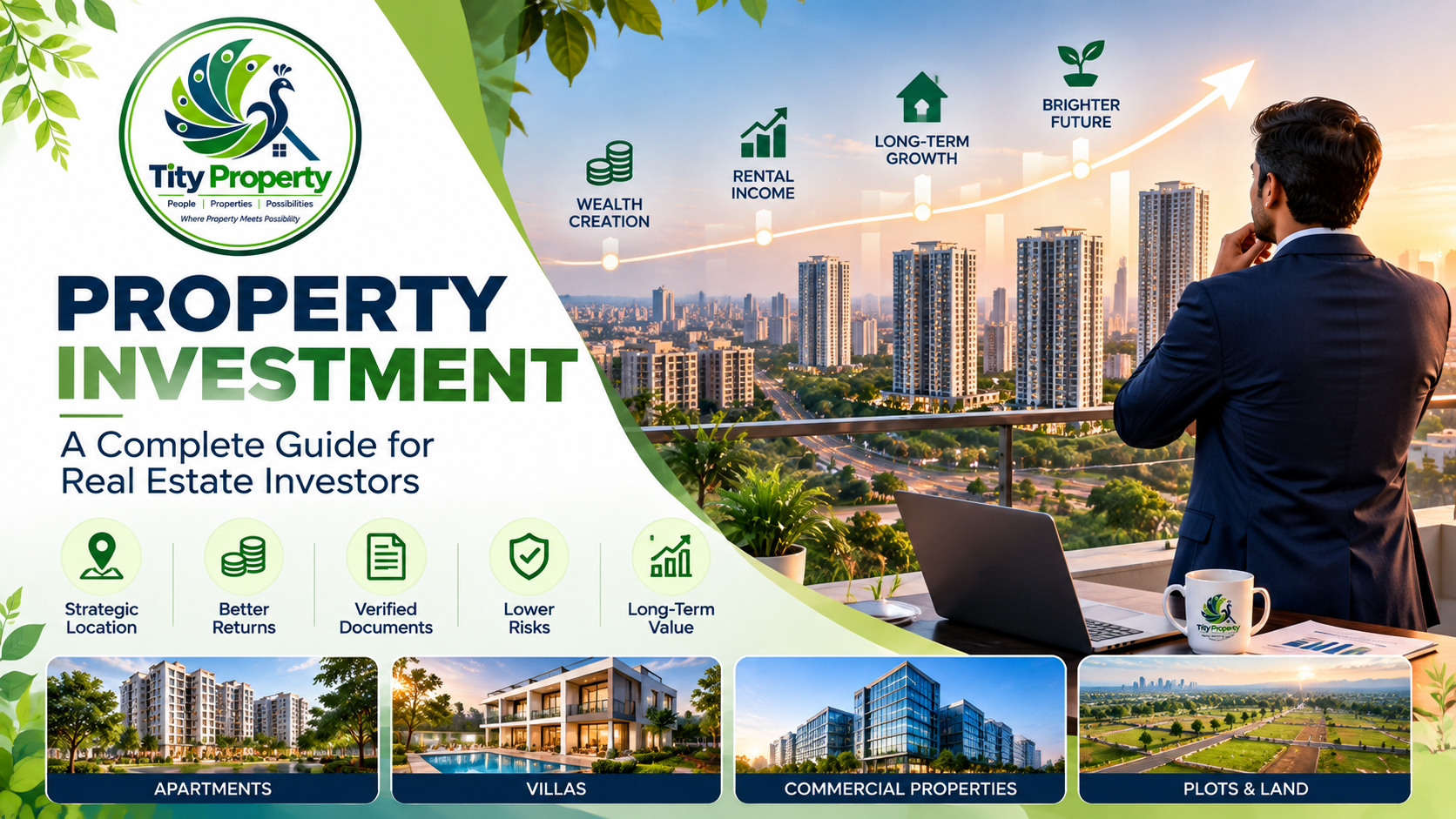
Property Buying: A Complete Guide for First-Time Home Buyers
Introduction
Buying a property is one of the most important financial decisions a person can make. Whether you are planning to purchase your first home, invest in residential real estate, acquire commercial property or buy a plot for future construction, understanding the buying process is essential.
A successful property purchase involves more than selecting an attractive property. Buyers should evaluate their budget, location preferences, property condition, ownership documents, applicable approvals and long-term requirements before making a commitment.
Tity Property helps connect property buyers with property owners and developers to explore opportunities based on their requirements and available properties.
1. Define Your Property Requirements
Before beginning your search, identify the type of property that best suits your needs.
Consider the following:
- Property Type: Apartment, flat, villa, independent house, commercial property, plot or land.
- Preferred Location: Identify suitable localities based on accessibility and daily requirements.
- Budget: Establish a realistic purchase budget.
- Property Size: Determine the required area, number of rooms and configuration.
- Purpose: Decide whether the property is intended for personal use, business operations, rental or investment.
- Timeline: Establish when you would like to complete the purchase.
Clearly defined requirements help you compare properties and focus on suitable opportunities.
2. Plan Your Total Budget
The total cost of purchasing a property may extend beyond its advertised price.
Consider these expenses:
- Property purchase price.
- Stamp duty and registration charges.
- Applicable taxes.
- Legal verification and professional fees.
- Brokerage or agreed service charges.
- Home loan processing fees and interest, if applicable.
- Interior work, furnishing and repairs.
- Maintenance deposits and recurring charges.
- Moving expenses and other incidental costs.
If you plan to use a home loan, assess your repayment capacity and understand the applicable interest rate, tenure and loan conditions before proceeding.
Maintaining a financial reserve for unexpected expenses can also help you manage the purchase more comfortably.
3. Choose the Right Location
Location can influence convenience, property suitability, rental demand and potential resale prospects.
Evaluate:
- Connectivity to major roads and public transport.
- Access to schools, hospitals and essential services.
- Distance from workplaces and business districts.
- Availability of water, electricity and drainage.
- Neighbourhood infrastructure and accessibility.
- Local property demand and comparable prices.
- Environmental conditions and surrounding development.
Visit the locality where possible and compare similar properties before making a decision.
Future development and property appreciation are uncertain, so verify relevant information rather than relying only on promotional claims.
4. Understand Different Property Types
Apartments and Flats
Apartments may suit buyers looking for residential communities with shared facilities and common-area management. Review the layout, usable area, maintenance charges, parking arrangements and ownership documentation.
Villas and Independent Houses
These properties may offer additional space and privacy. Evaluate construction quality, land ownership, maintenance responsibilities, access and applicable building permissions.
Commercial Properties
Commercial real estate may be suitable for business use or investment, depending on the property's permitted usage. Consider location, accessibility, building condition, occupancy and operating costs.
Plots and Land
Plots may be considered for residential construction or other permitted purposes. Verify ownership, boundaries, access, land classification and applicable approvals before purchasing.
Each property type has different costs, responsibilities and legal considerations.
5. Compare Properties Before Making a Decision
Avoid selecting a property based only on photographs or advertisements.
Compare shortlisted properties based on:
- Asking price and total acquisition cost.
- Location and connectivity.
- Property size and layout.
- Construction quality and condition.
- Available amenities.
- Maintenance requirements.
- Ownership and documentation.
- Applicable approvals.
- Suitability for your intended purpose.
A structured comparison can help you identify the strengths and limitations of each option.
6. Inspect the Property
Arrange a site visit before finalising your decision.
During the inspection, check:
- Actual property size and layout.
- Natural light and ventilation.
- Visible construction defects.
- Water supply and electrical facilities.
- Parking and access.
- Common areas and amenities.
- Surrounding infrastructure.
- Occupancy and maintenance conditions.
For land and plots, verify the physical location and boundaries against the available records.
For under-construction properties, review the construction progress, contractual terms and expected completion schedule.
Where necessary, obtain an independent technical inspection.
7. Verify Ownership Documents and Approvals
Legal verification is an essential part of purchasing real estate.
Depending on the property type, relevant documents may include:
- Sale deed and ownership records.
- Previous title documents.
- Encumbrance information.
- Property tax records.
- Approved building plans.
- Applicable project and development permissions.
- Occupancy or completion documentation, where applicable.
- Survey details and land records.
- Loan or mortgage-related documents.
- Relevant association or society records.
For applicable projects, verify registration and disclosures, including RERA requirements where relevant.
Document requirements vary according to the property and location. Consult a qualified property lawyer to independently review the documents before committing to the transaction.
8. Understand the Purchase and Registration Process
A typical property purchase involves the following stages:
Step 1: Finalise your requirements and budget.
Step 2: Shortlist suitable properties.
Step 3: Arrange site visits and compare options.
Step 4: Review the asking price and negotiate the terms.
Step 5: Complete legal and financial due diligence.
Step 6: Have the sale agreement reviewed by a qualified professional.
Step 7: Fulfil the agreed payment conditions.
Step 8: Complete applicable registration formalities.
Step 9: Take possession and retain the relevant documents according to the agreement.
The exact process may differ depending on whether the property is new, resale, under construction or purchased with financing.
9. Considerations for Property Buyers and Investors
If you are purchasing a property for investment, evaluate it separately from a property intended primarily for personal use.
Consider local rental demand, ongoing maintenance, vacancy risk, transaction costs, market conditions and the possibility that resale may take time.
Do not assume that rental income or property appreciation is guaranteed. Make decisions based on your financial circumstances, independently verified information and tolerance for risk.
10. Common Mistakes to Avoid
Buyers should be careful to avoid these common mistakes:
- Exceeding their affordable budget.
- Ignoring additional purchase expenses.
- Relying only on advertisements or verbal promises.
- Skipping ownership and document verification.
- Overlooking construction defects.
- Failing to understand maintenance obligations.
- Signing agreements without reviewing their terms.
- Making payments without appropriate documentation.
- Assuming that future appreciation is certain.
Careful preparation and professional advice can help reduce avoidable complications.
11. How Tity Property Can Help
Tity Property helps connect property buyers with owners and developers based on their requirements and available opportunities.
Property categories include:
- Residential apartments and flats.
- Premium villas and independent houses.
- Commercial properties and buildings.
- Residential plots and land.
- Property investment opportunities.
- Bulk property acquisition opportunities.
Buyers can share their preferred location, budget, property type and intended purpose to explore potentially relevant options.
Property availability, suitability and legal status should be independently verified before proceeding with a purchase.
Frequently Asked Questions
1. What should I check before buying a property?
Review the property's price, location, condition, ownership documents, applicable approvals and total purchase costs.
2. How do I decide my property-buying budget?
Consider your available funds, loan eligibility, repayment capacity and additional transaction expenses.
3. Is legal verification necessary before purchasing?
Yes. Independent verification helps identify potential ownership, documentation and compliance issues.
4. Can I purchase multiple properties together?
Multiple apartments, villas or other properties may be acquired together, subject to availability, due diligence and mutually agreed terms.
5. Does buying property guarantee future appreciation?
No. Property values depend on market conditions, location, demand and other factors. Future appreciation is not guaranteed.
6. How can Tity Property help me?
Tity Property helps connect buyers with property owners and developers to explore relevant opportunities based on their requirements.
Conclusion
Buying property requires careful planning, realistic budgeting, location assessment, property inspection and independent document verification.
Whether you are purchasing your first home, considering a commercial property or exploring land opportunities, a structured approach can help you make a more informed decision.
Explore property opportunities with Tity Property and identify options that align with your requirements.
Tity Property — People | Properties | Possibilities