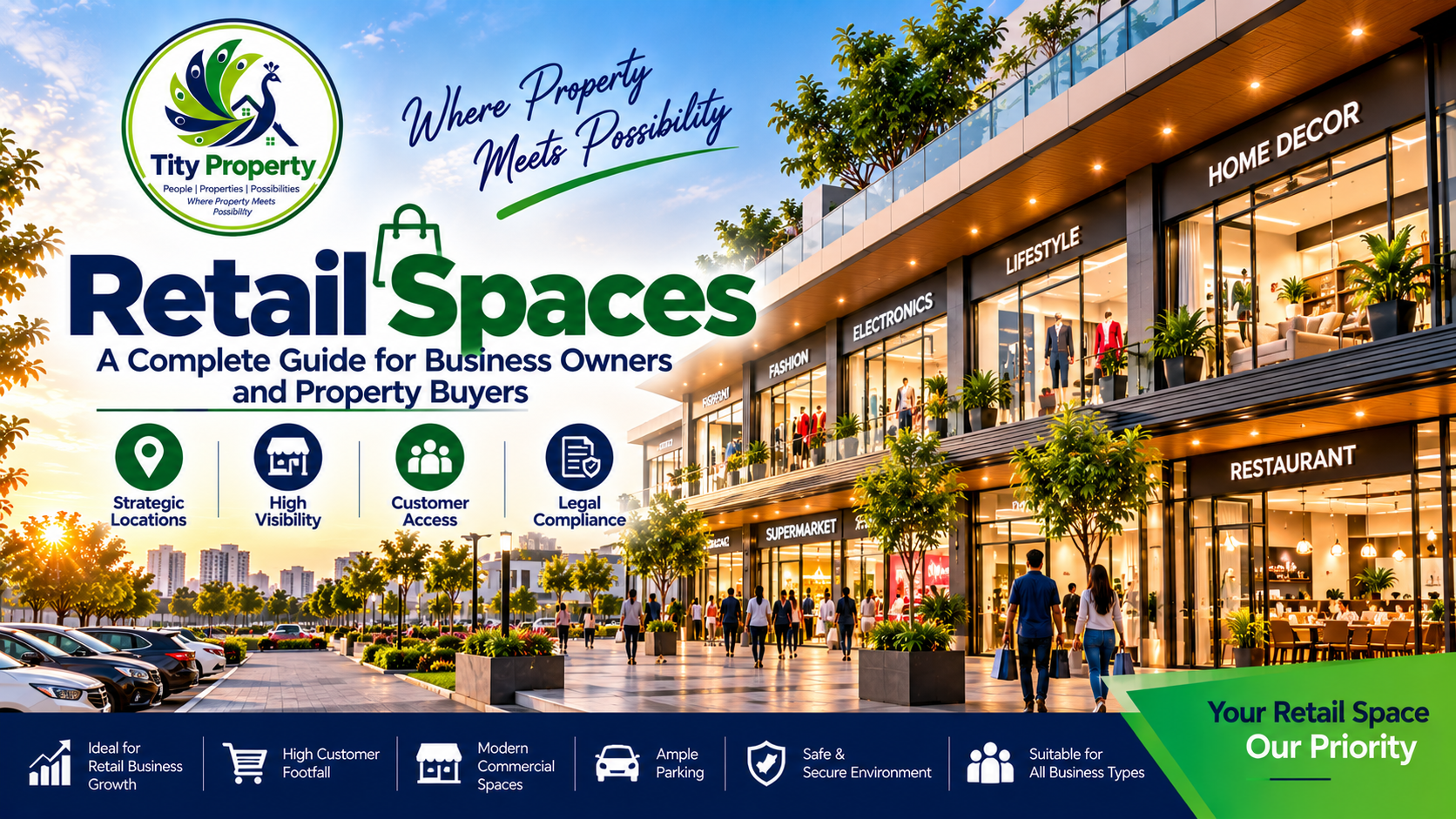
Retail Spaces: A Complete Guide for Business Owners and Property Buyers
Choosing the right retail space is an important decision for any business that interacts directly with customers. Whether you are opening a clothing store, establishing a showroom, launching a supermarket, or expanding an existing retail business, the location and suitability of your commercial property can influence daily operations and customer convenience.
A well-selected retail space should align with your business model, target audience, product category, budget, and operational requirements.
However, selecting a retail property involves more than comparing rental prices or choosing an attractive storefront. Business owners must also evaluate visibility, customer accessibility, parking, surrounding businesses, property specifications, legal permissions, and long-term occupancy costs.
At Tity Property, we help business owners and property buyers explore commercial property opportunities according to their requirements, preferred locations, and budgets.
1. What Is a Retail Space?
A retail space is a commercial property used for selling products or providing customer-facing services, subject to the property's permitted use.
Retail spaces may be located along main roads, within shopping complexes, inside malls, in commercial buildings, or in neighbourhood markets.
Depending on the property, a retail unit may include a customer-facing sales area, product display space, storage facilities, a billing counter, a back office, and other operational areas.
Retail properties serve a wide range of businesses, including:
- Clothing and fashion stores
- Electronics and mobile shops
- Supermarkets and grocery stores
- Furniture showrooms
- Jewellery stores
- Pharmacies, where permitted
- Food and beverage outlets, where permitted
- Beauty and personal care businesses
- Home furnishing stores
- Specialty retail outlets
The right property depends on the products or services offered, customer requirements, operating model, and applicable regulations.
2. Different Types of Retail Spaces
Understanding the available retail property formats can help you select a suitable location for your business.
Street-Facing Shops
Street-facing shops are located along roads or within commercial streets.
They may offer direct visibility to pedestrians and passing vehicles, depending on the location, frontage, traffic patterns, and surrounding environment.
Before selecting a shop, evaluate signage permissions, customer access, parking, and the suitability of the surrounding area for your business.
Shopping Complex Retail Units
These units are located within shopping complexes or multi-unit commercial buildings.
They may benefit from shared facilities, neighbouring businesses, and organized commercial infrastructure.
Buyers and tenants should review maintenance charges, building rules, operating hours, and the property's actual customer accessibility.
Mall Retail Spaces
Mall retail units are located within shopping malls and organized retail developments.
Depending on the mall, facilities may include common walkways, parking, security, escalators, elevators, and shared customer amenities.
Before entering into an agreement, evaluate rental terms, maintenance charges, marketing contributions, permitted business categories, and other applicable conditions.
Showrooms
Showrooms provide space for displaying products and interacting with customers.
They may be suitable for automobiles, furniture, electronics, appliances, lifestyle products, and other merchandise.
Businesses should consider frontage, display visibility, access, floor area, parking, and loading requirements.
Corner Retail Units
Corner units are located at the intersection of two roads or along prominent corners of commercial buildings.
Depending on the location, they may provide visibility from multiple directions.
However, actual suitability depends on pedestrian movement, road conditions, access restrictions, and the business's target audience.
Neighbourhood Retail Shops
Neighbourhood shops serve customers within residential communities and nearby localities.
They may be suitable for grocery stores, convenience shops, salons, pharmacies, and other businesses that depend on local demand.
Before choosing this format, assess the surrounding population, competition, accessibility, and permitted business use.
3. Choosing the Right Location for a Retail Business
Location is one of the most important considerations when selecting a retail property.
A suitable location should connect your business with its intended customers and support convenient shopping or service access.
Evaluate the following factors before making a decision.
Target Customer Profile
Understand the age groups, preferences, purchasing habits, and requirements of your intended customers.
Customer Footfall
Observe pedestrian movement and vehicle traffic at different times and on different days.
Footfall alone does not guarantee sales, so assess whether the people visiting the area match your target audience.
Visibility and Frontage
Check whether customers can easily notice the shop from the road, walkway, or surrounding commercial area.
Accessibility
Evaluate access by walking, two-wheelers, cars, public transportation, and other relevant modes of travel.
Parking Facilities
Consider the availability of convenient parking for customers, employees, and deliveries.
Nearby Businesses
Assess complementary businesses, competing outlets, and the overall commercial environment.
Residential and Commercial Catchment
Understand the surrounding population, offices, institutions, and other establishments that may influence customer demand.
Future Operational Needs
Consider whether the location can support your business if the product range, staffing, or customer volume changes.
For businesses exploring retail properties in Hyderabad or other commercial markets, compare multiple localities before finalizing a property.
A busy location is not automatically the best choice. The right location depends on your business category, target customers, operating costs, and accessibility requirements.
4. Understanding Retail Space Size and Layout
The layout of a retail property affects how customers move through the store and how efficiently employees can manage daily operations.
Before choosing a property, consider:
- Total usable floor area
- Storefront width
- Product display areas
- Customer circulation space
- Billing and checkout counters
- Storage and inventory areas
- Staff facilities
- Trial rooms, where required
- Loading and unloading access
- Electrical and equipment requirements
- Emergency exits and accessibility
- Space for future layout changes
A retail store should provide sufficient space for product presentation while allowing customers to move comfortably.
For businesses selling large products, the layout should also accommodate display units, customer demonstrations, and delivery arrangements where necessary.
Ask the property owner or developer to clarify the measurement method and the actual usable area available.
5. Evaluating Visibility and Customer Accessibility
Visibility and accessibility are important for many retail businesses because customers need to find and enter the premises conveniently.
During a site visit, evaluate the following:
Storefront Visibility: Check whether the premises are visible from relevant customer approach routes.
Signage Opportunities: Confirm the available signage locations and applicable building or local authority restrictions.
Entrance Accessibility: Ensure customers can enter the premises conveniently.
Pedestrian Movement: Observe foot traffic and access to nearby commercial facilities.
Parking and Drop-Off Areas: Assess whether customers can reach the store without unnecessary difficulty.
Public Transportation: Consider access to bus stops, metro stations, and other transportation options where relevant.
Delivery Access: Verify whether suppliers and delivery vehicles can reach the property conveniently.
Operating Hours: Check whether the building or commercial complex imposes restrictions on business hours.
A property visit during different time periods can help you understand actual accessibility and commercial activity.
6. Buying vs. Leasing Retail Space
Retail businesses can operate from purchased or leased commercial premises.
The appropriate option depends on the business's financial position, location strategy, operating model, and long-term plans.
Buying Retail Space
Purchasing retail property may suit businesses that intend to establish a long-term presence at a particular location and have sufficient capital or suitable financing.
Consider the following expenses and responsibilities:
- Property purchase price
- Applicable stamp duty and registration charges
- Legal verification expenses
- Financing costs, if applicable
- Renovation and interior design
- Signage and display installations
- Property taxes, where applicable
- Maintenance and repair responsibilities
- Applicable building or association charges
Ownership can provide greater control over the premises, subject to ownership rights and applicable regulations.
However, purchasing a property requires substantial capital and may reduce the funds available for inventory, staffing, marketing, and other business activities.
Leasing Retail Space
Leasing allows a business to occupy commercial premises under a rental agreement.
It may suit businesses that want to test a location, expand to multiple outlets, or preserve capital for daily operations.
Before leasing, review:
- Monthly rent
- Security deposit
- Lease duration
- Rent escalation clauses
- Maintenance and service charges
- Fit-out permissions
- Signage restrictions
- Operating hour requirements
- Renewal and termination conditions
- Restoration obligations
- Permitted business activities
Carefully review the agreement before signing and confirm that the property is appropriate for your intended business.
Neither option is universally better. Compare the total costs and business implications before making a decision.
7. Budgeting for Retail Space
The total cost of operating from a retail property includes more than the advertised purchase price or monthly rent.
Depending on the property and business, expenses may include:
- Property purchase price or rental deposit
- Monthly rent or loan repayments
- Applicable stamp duty and registration charges
- Brokerage fees, where applicable
- Legal verification expenses
- Interior design and fit-out
- Display racks and shelving
- Lighting and electrical installations
- Air conditioning and ventilation
- Billing and point-of-sale equipment
- Signage and branding
- Internet and utility charges
- Maintenance and service charges
- Security systems
- Insurance, where applicable
- Staff and inventory storage facilities
Businesses operating in malls or organized shopping complexes may also face additional charges under their agreements.
Prepare a detailed budget that accounts for initial setup costs and recurring operating expenses.
Your property budget should leave sufficient financial capacity for inventory, salaries, marketing, and other essential business activities.
8. Infrastructure and Facilities to Check
A suitable retail property should provide the infrastructure required for your business.
Evaluate these features before finalizing a location.
Electricity: Confirm that the available electrical capacity meets your equipment and lighting requirements.
Lighting: Assess natural and artificial lighting for product displays and customer comfort.
Air Conditioning and Ventilation: Verify whether the existing systems meet your business requirements.
Water Supply: Check water availability for businesses that require it.
Sanitation: Evaluate the available restroom and sanitation facilities.
Internet Connectivity: Confirm that the premises can support billing systems, digital payments, inventory management, and communication.
Fire Safety: Verify applicable fire safety requirements, emergency exits, and relevant approvals.
Security: Assess building security, access controls, and surveillance arrangements.
Loading and Storage: Check whether inventory can be delivered, unloaded, and stored efficiently.
Accessibility: Consider customer access, including the needs of people with disabilities, where applicable.
The infrastructure requirements will differ according to the type of products or services offered.
9. Legal Documents and Permissions to Verify
Legal verification is essential when buying or leasing retail property.
The documents and permissions required depend on the property's location, ownership structure, building status, and intended business activity.
Relevant checks may include:
- Title deed and ownership records
- Previous ownership documents, where relevant
- Encumbrance Certificate, where applicable
- Approved building plans
- Applicable occupancy and building approvals
- Permitted land use and zoning
- Property tax records
- Fire safety approvals, where required
- Existing mortgage or registered interests, where applicable
- Sale agreement or lease agreement
- Building association rules
- Signage permissions, where applicable
- Trade licence and other business permissions, where required
Businesses operating food outlets, pharmacies, or other regulated establishments may require additional licences and compliance measures.
For leased properties, verify the landlord's authority to lease the premises and confirm that the agreement permits the intended retail activity.
Important: Consult a qualified property lawyer and the relevant authorities to verify the property documents and applicable permissions before completing the transaction.
10. Understanding Customer Demand and Competition
Before selecting a retail property, assess whether the surrounding area is suitable for your products or services.
Consider the following factors.
Customer Demographics
Understand the surrounding population and the customer groups your business intends to serve.
Local Purchasing Patterns
Assess whether the location and customer base match your product category and pricing.
Competing Businesses
Identify similar businesses nearby and understand their product offerings, pricing, and customer positioning.
Complementary Businesses
Consider whether nearby establishments may attract customers who are also interested in your products or services.
Commercial Activity
Observe activity during weekdays, weekends, and different times of day.
Seasonal Factors
Some retail businesses experience significant seasonal changes in demand. Consider whether the location suits those patterns.
Online and Offline Sales
If your business operates both online and offline, evaluate whether the premises can support customer visits, inventory management, order collection, or dispatch.
A location assessment should support your business plan rather than rely solely on assumptions about customer footfall.
11. Retail Spaces for Different Business Categories
Different businesses have different property requirements.
Clothing and Fashion Stores
These businesses may require attractive storefronts, product displays, fitting rooms, storage, and sufficient customer circulation space.
Electronics and Mobile Shops
These outlets may need suitable electrical infrastructure, display counters, security arrangements, and space for customer demonstrations.
Grocery Stores and Supermarkets
These businesses may require inventory storage, refrigeration where necessary, delivery access, and convenient customer entry.
Furniture and Home Furnishing Showrooms
These outlets may require larger floor areas, suitable loading access, product display space, and adequate parking.
Food and Beverage Outlets
These businesses may require appropriate ventilation, water supply, drainage, kitchen infrastructure, fire safety measures, and relevant permissions.
Specialty Retail Businesses
Specialty stores may need a location and layout suited to their specific customer group, product type, and service requirements.
Before purchasing or leasing a retail property, verify that the premises can legally and practically support your intended business category.
12. Common Mistakes to Avoid When Choosing Retail Space
Business owners and property buyers should avoid the following mistakes.
Choosing Only on Rental Price
A low rental price may not compensate for poor visibility, unsuitable customer access, or inadequate infrastructure.
Ignoring the Target Audience
A busy commercial area may still be unsuitable if it does not attract your intended customers.
Overlooking Additional Charges
Clarify maintenance fees, parking charges, utility costs, and other recurring expenses.
Failing to Inspect the Property
Visit the premises and assess the actual layout, condition, and surrounding environment.
Ignoring Signage Restrictions
Confirm that the intended signage and branding can be installed lawfully.
Overlooking Lease Conditions
Review escalation clauses, renewal terms, termination conditions, and fit-out permissions.
Failing to Verify Legal Permissions
Confirm that the premises can be used for the intended business activity.
Underestimating Setup Costs
Include interiors, displays, equipment, inventory storage, and utility installations in your budget.
Making a Decision Without Comparing Locations
Compare alternative properties according to business requirements, customer accessibility, and total occupancy costs.
13. How Tity Property Helps You Explore Retail Space Opportunities
Finding the right retail property requires careful comparison of location, visibility, accessibility, layout, infrastructure, cost, and legal requirements.
Tity Property helps business owners and property buyers explore commercial property opportunities according to their requirements and preferences.
Whether you are searching for a small retail shop, a premium showroom, a unit in a shopping complex, or commercial space for a growing retail business, you can share your requirements to begin exploring available opportunities.
Our property assistance is designed to help buyers and business owners navigate their search and identify properties worth evaluating.
Before entering into a purchase or lease agreement, buyers should independently verify property availability, specifications, ownership documents, permitted use, and applicable regulatory requirements.
Why Explore Retail Properties with Tity Property?
- Explore retail spaces in preferred locations.
- Consider properties based on your business category.
- Compare available options according to your budget.
- Evaluate storefront visibility and accessibility.
- Review important property details before making a decision.
- Seek assistance in navigating your commercial property search.
Property availability and suitability depend on your requirements and the properties available at the time of enquiry.
Conclusion
Selecting the right retail space is an important decision that can influence customer accessibility, operational convenience, and overall business costs.
By understanding your target audience, evaluating the location, assessing the layout, planning your budget, and verifying the property's legal status, you can make a more informed decision.
Whether you are launching a new retail outlet, expanding an existing business, or purchasing commercial property, careful planning is essential before committing to a location.
Tity Property — People | Properties | Possibilities
Where Property Meets Possibility.