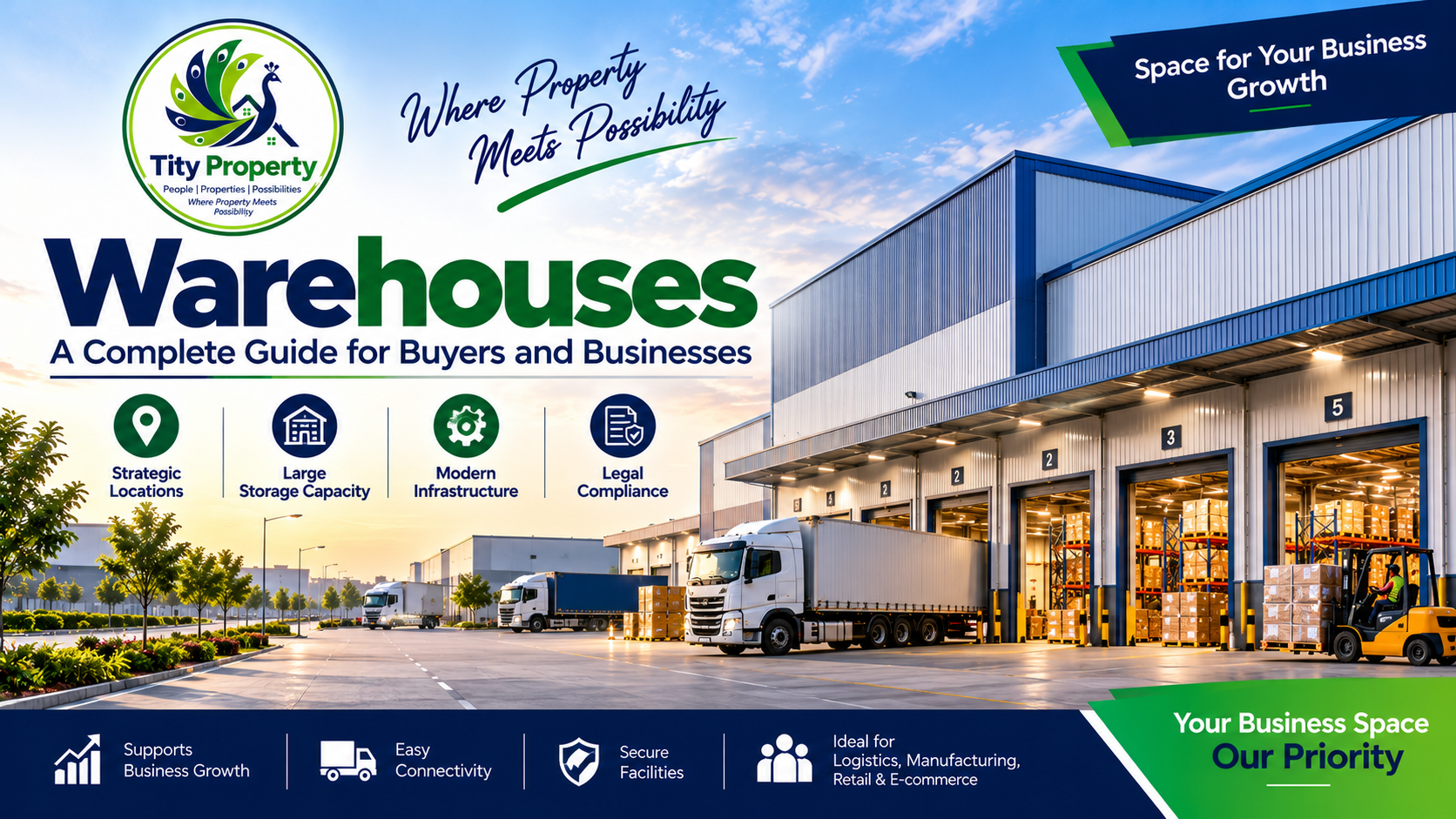
Warehouses: A Complete Guide for Buyers and Businesses
Warehouses play an important role in modern business operations by providing space for storing goods, managing inventory, and supporting distribution activities. From e-commerce and retail to manufacturing and logistics, businesses depend on suitable warehouse facilities to manage their supply chains efficiently.
Choosing the right warehouse involves more than evaluating the building's size. Businesses and property buyers must consider location, transportation access, storage requirements, building specifications, utility availability, legal permissions, and total ownership or leasing costs.
Whether you are searching for a warehouse for your own operations or exploring warehouse property opportunities, understanding these factors can help you make a more informed decision.
At Tity Property, we help buyers and businesses explore property opportunities according to their requirements, preferred locations, and budgets.
1. What Is a Warehouse?
A warehouse is a building or designated facility used primarily for storing goods, materials, equipment, inventory, or products before they are distributed, sold, or used in business operations.
Warehouses serve different purposes depending on the industry, type of goods, storage requirements, and operational processes.
A warehouse may be used for:
- Storage of raw materials
- Finished goods inventory
- E-commerce order fulfilment
- Retail distribution
- Manufacturing support
- Wholesale operations
- Transportation and logistics
- Cold storage, where appropriately equipped
- Packaging and dispatch operations
The right warehouse depends on the nature of the business and the conditions required to store and handle its products safely.
2. Different Types of Warehouses
Understanding the different warehouse categories helps businesses identify suitable facilities.
General Storage Warehouses
These facilities are used for storing goods, equipment, packaging materials, and other inventory that does not require specialized environmental conditions.
They may suit wholesalers, distributors, retailers, and businesses that need additional storage capacity.
Distribution Warehouses
Distribution warehouses are designed to support the movement of products between suppliers, businesses, retailers, and customers.
Their suitability depends on transportation access, loading facilities, inventory management requirements, and operational layout.
E-Commerce Fulfilment Centres
These facilities support online retail operations by providing space for inventory storage, order picking, packing, and dispatch.
Businesses should evaluate the facility's layout, loading capacity, connectivity, and suitability for their order volumes.
Cold Storage Warehouses
Cold storage facilities are designed to maintain specified temperature conditions for products that require controlled environments.
They may be used for food products, pharmaceuticals, and other temperature-sensitive goods, subject to the applicable requirements.
Buyers should verify the refrigeration systems, temperature monitoring, backup power, maintenance arrangements, and regulatory compliance before selecting such a facility.
Industrial Warehouses
Industrial warehouses may support manufacturing, equipment storage, raw materials handling, or other industrial activities, depending on the property's approved use.
Businesses should verify the applicable zoning, building specifications, safety requirements, and environmental permissions.
Logistics and Transportation Warehouses
These facilities support the movement, temporary storage, consolidation, and distribution of goods.
Their suitability depends on road connectivity, vehicle access, loading areas, operational capacity, and proximity to relevant transportation routes.
3. Choosing the Right Warehouse Location
Location is one of the most important factors when selecting a warehouse.
A suitable location can improve transportation convenience, support distribution activities, and help businesses manage logistics requirements.
Consider the following factors before choosing a property.
Road Connectivity
Check access to major roads, highways, and routes used by transport vehicles.
Transportation Networks
Evaluate proximity to relevant railway terminals, ports, airports, or other transportation facilities according to your business requirements.
Supplier and Customer Accessibility
Consider the warehouse's distance from suppliers, manufacturing facilities, distribution points, and customer markets.
Labour Availability
Assess access to the workforce required for warehouse operations.
Utility Availability
Verify electricity, water, internet connectivity, drainage, and other essential services.
Surrounding Infrastructure
Review road conditions, vehicle movement, drainage, and the suitability of neighbouring land uses.
Operational Accessibility
Confirm whether the property supports the types and sizes of vehicles used by your business.
For businesses exploring warehouse properties in Hyderabad or other locations, comparing multiple industrial and logistics areas can help identify suitable options.
The best location depends on the goods handled, delivery routes, workforce requirements, and overall operating model.
4. Understanding Warehouse Size and Storage Capacity
Warehouse size should be evaluated according to the business's actual storage and operational requirements.
A large building is not necessarily the most suitable choice if its layout, height, access, or infrastructure does not support the intended use.
Before selecting a warehouse, assess:
- Total built-up area
- Usable storage area
- Clear internal height
- Floor loading capacity
- Column spacing
- Loading and unloading areas
- Vehicle movement space
- Internal circulation
- Office and administrative areas
- Staff facilities
- Parking and external access
- Provision for future expansion, where applicable
Businesses should also consider inventory turnover, seasonal demand, product dimensions, pallet storage, and equipment requirements.
For facilities using forklifts, high racks, or automated storage systems, verify that the building can safely accommodate the proposed equipment and layout.
Consider obtaining a professional technical assessment before committing to a warehouse intended for specialized operations.
5. Important Warehouse Infrastructure and Features
The warehouse's infrastructure can affect operational efficiency, safety, and ongoing expenses.
Loading and Unloading Facilities
Evaluate the number and configuration of loading bays, dock areas, ramps, and vehicle access points.
Flooring and Floor Load Capacity
Check the floor condition and confirm that its load capacity is suitable for the intended inventory and equipment.
Roof and Building Condition
Inspect the roof, walls, structural components, drainage systems, and signs of water leakage.
Electrical Infrastructure
Verify that the available electrical capacity supports lighting, equipment, refrigeration, or other operational requirements.
Fire Safety
Check the applicable fire safety requirements, emergency exits, fire detection systems, firefighting equipment, and relevant approvals.
Security Arrangements
Assess access control, perimeter security, lighting, surveillance systems, and other relevant safeguards.
Water and Sanitation
Confirm the availability of water, sanitation, drainage, and staff facilities.
Internet and Communication
Check whether the facility supports the connectivity required for inventory systems, communication, and business operations.
Office and Staff Areas
Some businesses require office space, employee facilities, meeting rooms, or administrative areas within or alongside the warehouse.
Evaluate these requirements before finalizing the property.
6. Buying vs. Leasing a Warehouse
Businesses can acquire warehouse space through purchase or lease arrangements.
The appropriate option depends on financial resources, operational stability, location requirements, and long-term plans.
Buying a Warehouse
Purchasing may suit businesses that expect to use the property for an extended period and have the financial capacity to acquire and maintain it.
Potential considerations include:
- Initial capital requirement
- Ownership and financing costs
- Registration and applicable taxes
- Maintenance responsibilities
- Property suitability for future operations
- Long-term flexibility, subject to legal restrictions
Ownership also involves responsibility for repairs, property-related expenses, and compliance obligations.
Leasing a Warehouse
Leasing may suit businesses that need operational space without purchasing the property.
Potential considerations include:
- Initial deposit
- Monthly rent
- Lease duration
- Rent escalation clauses
- Maintenance responsibilities
- Permitted use
- Renewal and termination conditions
- Alteration and restoration obligations
Before signing a lease, review the agreement carefully and confirm that the property is suitable for the intended business activity.
Neither option is universally better. Businesses should compare the total costs and operational implications of each arrangement.
7. Budgeting for Warehouse Purchase or Lease
The total cost of warehouse occupancy includes more than the purchase price or monthly rent.
Depending on the transaction, relevant expenses may include:
- Property purchase price or rental deposit
- Monthly rent or loan repayments
- Applicable stamp duty and registration charges
- Brokerage fees, where applicable
- Legal verification expenses
- Repairs and renovation
- Electrical upgrades
- Fire safety installations
- Racking and storage equipment
- Security systems
- Utility expenses
- Insurance
- Property taxes, where applicable
- Maintenance charges
- Loading equipment and handling systems
For specialized facilities, refrigeration, backup power, temperature monitoring, and other technical systems may involve additional capital and operating costs.
Prepare a detailed cost estimate based on your business requirements before making a commitment.
8. Legal Documents and Compliance to Verify
Legal verification is essential when purchasing or leasing warehouse property.
The documents and permissions required depend on the location, building type, ownership structure, and intended use.
Relevant checks may include:
- Title deed and ownership records
- Previous ownership documents, where relevant
- Encumbrance Certificate, where applicable
- Approved building plans
- Permitted land use and zoning
- Applicable building and occupancy approvals
- Property tax records
- Fire safety approvals, where required
- Environmental permissions, where applicable
- Electricity and utility-related records
- Existing mortgage or other registered interests
- Sale agreement or lease agreement
- Applicable industrial or operational permissions
For leased properties, verify the landlord's authority to lease the premises and confirm that the lease permits the intended business activity.
Businesses handling regulated, hazardous, temperature-sensitive, or specialized goods may need additional permissions and compliance measures.
Important: Consult a qualified property lawyer and relevant technical professionals to verify the property and applicable requirements before completing the transaction.
9. Evaluating a Warehouse for Business Operations
Before selecting a warehouse, businesses should assess whether the facility supports their actual operational processes.
Consider the following questions:
- Can the property accommodate the required inventory volume?
- Is the internal layout suitable for storage and movement?
- Can delivery vehicles enter, turn, load, and exit safely?
- Is the flooring appropriate for the intended equipment?
- Are the electrical and utility facilities sufficient?
- Are the fire safety and security arrangements appropriate?
- Is the location suitable for supplier and customer routes?
- Are staff facilities adequate?
- Can the business manage the total occupancy and operating costs?
- Does the property have the necessary permissions for the intended activity?
A site visit and operational assessment can help identify limitations that may not be obvious from photographs or marketing brochures.
10. Common Mistakes to Avoid When Selecting a Warehouse
Businesses and property buyers should avoid the following mistakes.
Choosing Based Only on Rent or Purchase Price
A low price may not compensate for poor connectivity, inadequate infrastructure, or expensive modifications.
Ignoring Vehicle Access
Confirm that the property can accommodate the vehicles used in daily operations.
Overlooking Floor Load Capacity
Verify that the flooring can safely support inventory, equipment, and storage systems.
Failing to Check Legal Permissions
Confirm the permitted use and relevant building and operational approvals.
Underestimating Fit-Out Costs
Include racking, electrical work, safety systems, repairs, and other setup expenses.
Ignoring Fire Safety Requirements
Assess the applicable safety obligations before beginning operations.
Overlooking Lease Conditions
Review rent escalation, renewal, termination, maintenance, and restoration clauses.
Failing to Plan for Future Requirements
Consider whether the property can accommodate expected changes in inventory, staffing, or operational processes.
11. How Tity Property Helps Businesses Explore Warehouse Opportunities
Finding the right warehouse requires careful comparison of location, storage capacity, access, infrastructure, pricing, and legal requirements.
Tity Property helps buyers and businesses explore property opportunities according to their operational needs and preferences.
Whether you need a general storage warehouse, a distribution facility, industrial space, or a property for logistics operations, you can share your requirements to begin exploring available opportunities.
Our property assistance is designed to help businesses navigate their property search and identify facilities worth evaluating.
Before entering into a purchase or lease agreement, businesses should independently verify property availability, specifications, legal status, permitted use, and compliance requirements.
Why Explore Warehouse Properties with Tity Property?
- Explore warehouse opportunities in preferred locations.
- Consider facilities based on storage and operational requirements.
- Compare available properties according to your budget.
- Evaluate connectivity and infrastructure requirements.
- Seek assistance in navigating your commercial property search.
Property availability and suitability depend on your requirements and the properties available at the time of enquiry.
Conclusion
Selecting a warehouse is an important business decision that requires careful evaluation of location, capacity, infrastructure, transportation access, budget, and legal compliance.
By identifying your operational requirements and comparing properties systematically, you can make a more informed decision about purchasing or leasing warehouse space.
Whether you are expanding your business, improving distribution operations, or exploring commercial property opportunities, the process should begin with a clear understanding of your needs.
Tity Property — People | Properties | Possibilities
Where Property Meets Possibility.