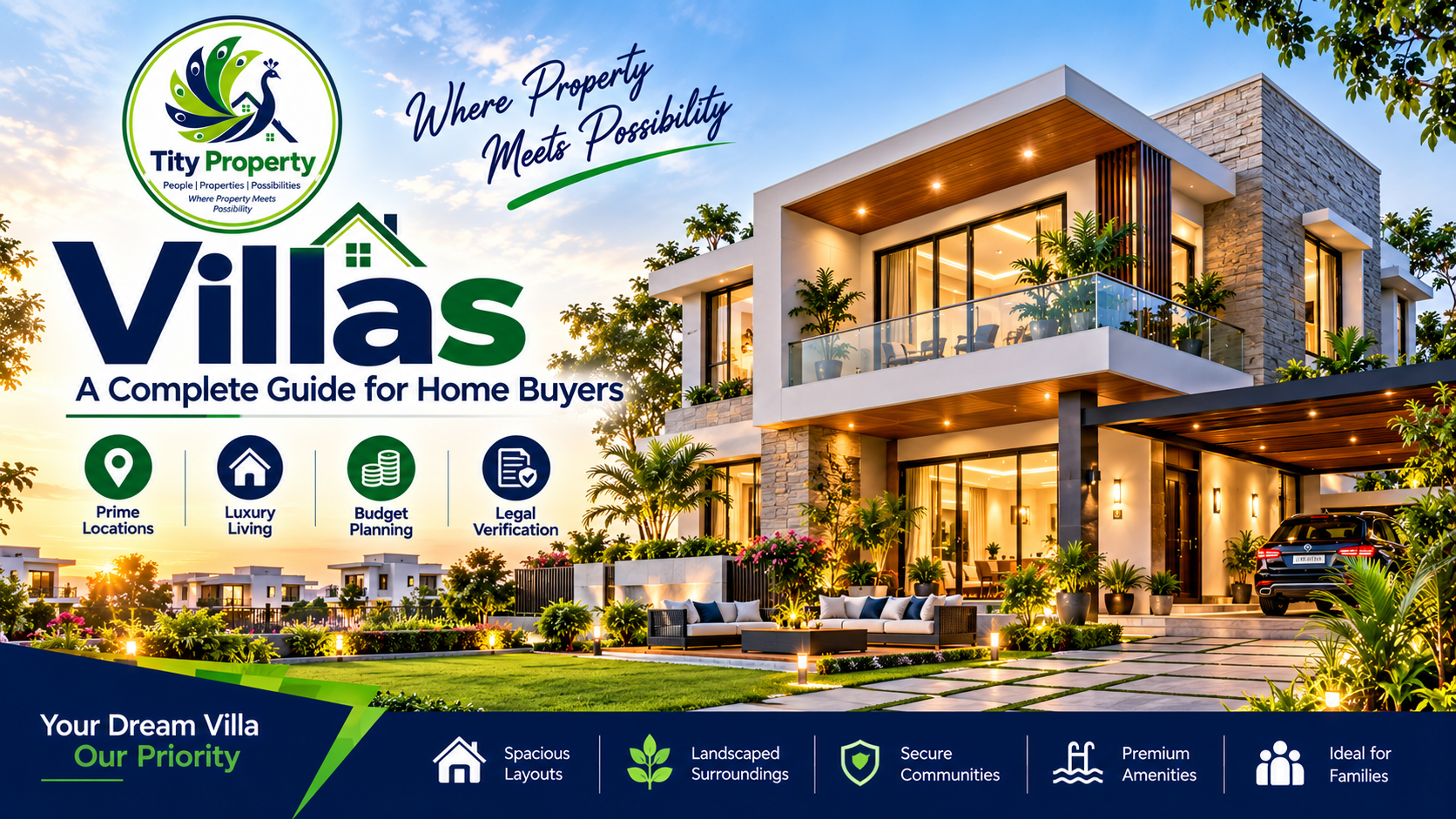
Villas: A Complete Guide for Home Buyers
A villa represents more than a residential property. For many home buyers, it offers an opportunity to enjoy spacious living, greater privacy, personalized interiors, and a comfortable residential environment.
Whether you are searching for a family home, planning to upgrade your lifestyle, or exploring premium residential properties, purchasing a villa requires careful evaluation of the location, construction quality, budget, amenities, and legal documentation.
With different villa designs and residential communities available, buyers should understand their requirements before making a decision.
At Tity Property, we help buyers explore property opportunities according to their preferences, location requirements, and budgets.
1. What Is a Villa?
A villa is a residential property generally designed to provide a spacious and relatively private living experience. Villas may be standalone homes or part of a planned residential community.
Depending on the project, a villa may include multiple bedrooms, living and dining areas, a private garden, a terrace, parking space, and outdoor recreational areas.
Some villas are located within gated communities that offer shared facilities such as security arrangements, landscaped gardens, clubhouses, swimming pools, and fitness centres.
The design, ownership structure, available amenities, and maintenance responsibilities vary between properties.
Before purchasing a villa, buyers should carefully review the property specifications, land ownership arrangements, applicable approvals, and community rules.
2. Different Types of Villas
Understanding the available villa categories can help you identify a property that suits your lifestyle and requirements.
Independent Villas
Independent villas generally provide a separate residential structure with private access and, depending on the property, an individual plot or outdoor area.
They may appeal to buyers who value privacy and flexibility in how they use their living space.
Gated Community Villas
Gated community villas are located within planned residential developments.
Depending on the project, residents may have access to shared facilities, landscaped areas, internal roads, security arrangements, and recreational spaces.
Buyers should understand the applicable maintenance charges and community regulations before purchasing.
Luxury Villas
Luxury villas may feature spacious layouts, premium interiors, upgraded fittings, landscaped outdoor spaces, and additional lifestyle facilities.
The actual specifications and quality vary by project, so buyers should inspect the property and verify the features included in the purchase price.
Duplex Villas
Duplex villas generally provide living spaces across two connected levels.
They can offer separate areas for bedrooms, family activities, entertainment, and other household needs.
Premium Residential Villas
Premium residential villas may combine contemporary architecture, larger living areas, outdoor spaces, and selected lifestyle amenities.
When evaluating these properties, compare the actual construction quality, usable area, land details, and overall cost rather than relying only on marketing descriptions.
3. Benefits of Buying a Villa
Villas offer several features that attract home buyers.
Greater Privacy
Villas generally provide more separation from neighbouring homes than apartments with shared walls and common corridors.
Spacious Living
Many villas offer multiple bedrooms, larger living areas, and additional spaces for family activities.
Outdoor Areas
Depending on the property, buyers may enjoy a garden, terrace, courtyard, or other private outdoor space.
Personalized Interiors
Villas may provide greater flexibility for interior design and selected property modifications, subject to ownership rights, approvals, and applicable regulations.
Family-Friendly Environment
Some villas are located within residential communities that provide landscaped spaces, children's play areas, walking paths, and recreational facilities.
Parking Convenience
Many villas include private parking, although capacity and access arrangements depend on the individual property.
Long-Term Residential Planning
A villa may suit families looking for a home that accommodates changing space requirements over time.
These benefits depend on the property, location, design, and ownership conditions. Buyers should evaluate each villa individually before making a decision.
4. Choosing the Right Location for Your Villa
Location is a major factor when purchasing a villa because it affects daily convenience, connectivity, and access to essential services.
Before selecting a property, evaluate the following:
- Road Connectivity: Check access to major roads, highways, and public transportation.
- Workplace Accessibility: Consider commuting time to employment centres or business districts.
- Educational Institutions: Evaluate nearby schools, colleges, and other educational facilities.
- Healthcare Facilities: Check access to hospitals, clinics, and pharmacies.
- Shopping and Daily Needs: Review the availability of supermarkets, banks, restaurants, and essential services.
- Water and Electricity: Understand the reliability of essential utilities.
- Drainage and Infrastructure: Examine road conditions, drainage systems, and surrounding infrastructure.
- Neighbourhood Environment: Visit the locality to assess noise levels, traffic, accessibility, and general surroundings.
- Future Development: Verify officially announced infrastructure projects that may affect the area.
If you are considering villas in Hyderabad or other growing residential markets, compare locations based on your daily requirements and financial plans.
Do not make a purchase decision solely on claims about future development or expected price appreciation. Verify relevant information independently.
5. Understanding Villa Sizes and Layouts
Villa sizes and configurations vary depending on the project and intended use.
Before choosing a villa, understand the difference between the land area, built-up area, and carpet area where applicable.
Land Area: The area of the plot associated with the property, subject to the ownership documents.
Built-Up Area: Generally includes the constructed area and applicable wall areas, depending on the measurement method used.
Carpet Area: The usable floor area within the apartment or residential unit, as defined by the applicable measurement rules.
For villas, verify how the seller or developer calculates each area and what is included in the quoted specifications.
Also evaluate:
- Number and size of bedrooms
- Living and dining areas
- Kitchen layout
- Bathrooms
- Staircase design
- Natural lighting and ventilation
- Storage space
- Parking capacity
- Garden and terrace areas
- Accessibility and movement between floors
Choose a layout that supports your household's daily activities rather than selecting a property based only on its overall size.
6. Evaluating Construction Quality
Construction quality can influence comfort, maintenance requirements, and future repair expenses.
During a villa inspection, pay attention to:
- Structural condition and visible cracks
- Roof and terrace waterproofing
- Wall finishes and flooring
- Electrical wiring and fittings
- Plumbing and drainage systems
- Bathroom and kitchen installations
- Doors, windows, and ventilation
- Quality of construction materials
- Exterior finishes and weather protection
- Staircase safety
- Water supply and storage arrangements
- Parking and driveway condition
For newly constructed villas, review the construction specifications and verify that the completed property matches the approved plans.
For resale villas, assess the building's age, repair history, and any modifications made after construction.
Consider hiring a qualified civil engineer or building inspector for a professional evaluation before completing the purchase.
7. Setting a Realistic Villa Purchase Budget
Villa purchases may involve substantial upfront and ongoing expenses.
In addition to the advertised price, buyers should consider:
- Property purchase price
- Applicable stamp duty and registration charges
- Legal verification fees
- Home loan processing costs, if applicable
- Interior design and furnishing
- Landscaping and outdoor improvements
- Repairs and renovations
- Electricity and water-related expenses
- Property taxes
- Community maintenance charges, where applicable
- Security and facility charges, where applicable
- Long-term maintenance and repair expenses
Ask the seller or developer for a detailed cost breakdown.
For gated community villas, clarify whether clubhouse access, maintenance deposits, infrastructure charges, and other applicable fees are included in the quoted price.
A realistic budget should account for both the purchase and the ongoing cost of ownership.
8. Legal Documents to Verify Before Buying a Villa
Legal verification is essential when purchasing a villa, particularly when the transaction includes land ownership and construction.
Depending on the property and location, relevant documents may include:
- Title deed and ownership records
- Previous title documents, where relevant
- Encumbrance Certificate, where applicable
- Approved layout plan
- Approved building plan
- Applicable land-use permissions
- Construction and development approvals
- Occupancy or Completion Certificate, where applicable
- RERA registration details, where registration is required
- Property tax receipts
- Sale agreement and draft sale deed
- Relevant community or association documents
- Existing mortgage or loan-related records, if applicable
For villas within gated communities, verify the legal status of the project, the individual villa, the associated land, and the common facilities.
Check whether the actual construction matches the approved plans and whether any unauthorized modifications exist.
If the villa is being purchased from a developer, review the contractual terms, payment schedule, possession conditions, and obligations of the parties.
Important: Engage a qualified property lawyer to verify ownership, approvals, encumbrances, and other relevant legal matters before entering into a binding transaction.
9. Villas vs. Apartments: Which Is Better?
Both villas and apartments can be suitable residential options. The right choice depends on your budget, lifestyle, space requirements, and preferred location.
| Factor | Villas | Apartments |
|---|---|---|
| Privacy | Generally offers greater separation | May involve shared walls and common spaces |
| Living Space | Often provides larger layouts | Available in different configurations |
| Outdoor Areas | May include a private garden or terrace | Depends on the unit and project |
| Maintenance | Owner may manage more individual property maintenance | Common maintenance is often shared |
| Amenities | Depends on the individual property or community | May include shared residential facilities |
| Customization | Subject to ownership rights and applicable approvals | Subject to building and association rules |
| Purchase Cost | Depends on land, size, location, and specifications | Depends on unit size, location, and project |
| Community Living | Available in villa communities | Common in apartment complexes |
Compare actual properties, including total ownership costs, legal status, and available facilities, before choosing.
10. Understanding Villa Maintenance
Owning a villa involves ongoing maintenance to preserve the property's condition and usability.
Common maintenance requirements include:
- Interior and exterior painting
- Roof and terrace repairs
- Waterproofing
- Plumbing and electrical maintenance
- Pest control
- Water tank cleaning
- Garden and landscaping maintenance
- Gate and boundary wall repairs
- Driveway maintenance
- Drainage and rainwater management
- Periodic inspection of structural elements
For villas in gated communities, additional charges may apply for security, internal roads, landscaping, common facilities, and community management.
Ask for a clear explanation of maintenance responsibilities and recurring charges before purchasing.
Understanding these expenses helps you plan your finances and manage the property more effectively.
11. Is Buying a Villa Suitable for Investment?
Some buyers consider villas for long-term property ownership or as part of a broader real estate investment strategy.
However, a villa should be evaluated carefully before making an investment decision.
Consider the following factors:
Location and Accessibility: Evaluate connectivity, nearby infrastructure, and access to essential services.
Total Acquisition Cost: Include the purchase price, registration, legal fees, repairs, and other applicable expenses.
Property Condition: Assess construction quality, maintenance requirements, and the possibility of future repairs.
Legal Status: Verify ownership, approvals, land records, and any applicable restrictions.
Resale Considerations: Consider the property's suitability for potential future buyers and the availability of comparable properties.
Rental Feasibility: If rental use is intended, review local demand, potential rental income, maintenance costs, and applicable permissions.
Real estate values and rental income can change with market conditions. Neither appreciation nor rental returns are guaranteed.
Buyers should independently assess their financial circumstances and seek qualified professional advice when necessary.
12. Common Mistakes to Avoid When Buying a Villa
Avoid these common mistakes to make a more informed property decision.
Ignoring Legal Verification
Verify ownership documents, land records, approvals, and other relevant information before committing.
Choosing Only on Appearance
An attractive design does not necessarily indicate good construction quality or a suitable location.
Underestimating Maintenance Costs
Consider the long-term expenses associated with the building, garden, utilities, and community facilities.
Overlooking Water and Drainage
Check essential infrastructure and understand how water supply and drainage are managed.
Relying on Verbal Promises
Ensure that important commitments are documented in the appropriate agreements.
Ignoring the Actual Land and Built-Up Areas
Verify the property's measurements against the relevant documents and specifications.
Making Decisions Under Pressure
Take sufficient time to inspect the property, review documents, compare alternatives, and seek professional advice.
13. How Tity Property Helps You Explore Villa Opportunities
Finding the right villa involves comparing locations, layouts, construction quality, prices, amenities, and legal details.
Tity Property helps buyers explore residential property opportunities based on their requirements and preferences.
Whether you are looking for an independent villa, a premium residence, or a villa within a gated community, you can share your requirements to begin exploring available property opportunities.
Our property assistance is designed to help buyers navigate the search process and identify properties worth evaluating.
Before proceeding with any transaction, buyers should independently verify property availability, ownership records, construction approvals, specifications, and applicable legal requirements.
Why Explore Villa Opportunities with Tity Property?
- Explore villa options based on your preferred location.
- Consider properties that align with your space requirements.
- Compare available options within your budget.
- Evaluate residential properties according to your priorities.
- Seek assistance in navigating your property search.
Property availability and suitability depend on the buyer's requirements and the properties available at the time of enquiry.
Conclusion
Buying a villa is an important decision that requires careful planning and thorough evaluation.
By understanding your requirements, selecting a suitable location, assessing construction quality, planning your budget, and verifying legal documents, you can make a more informed decision about your future home.
Whether you are searching for a spacious family residence or exploring premium residential properties, the process should begin with a clear understanding of your priorities.
Tity Property — People | Properties | Possibilities
Where Property Meets Possibility.