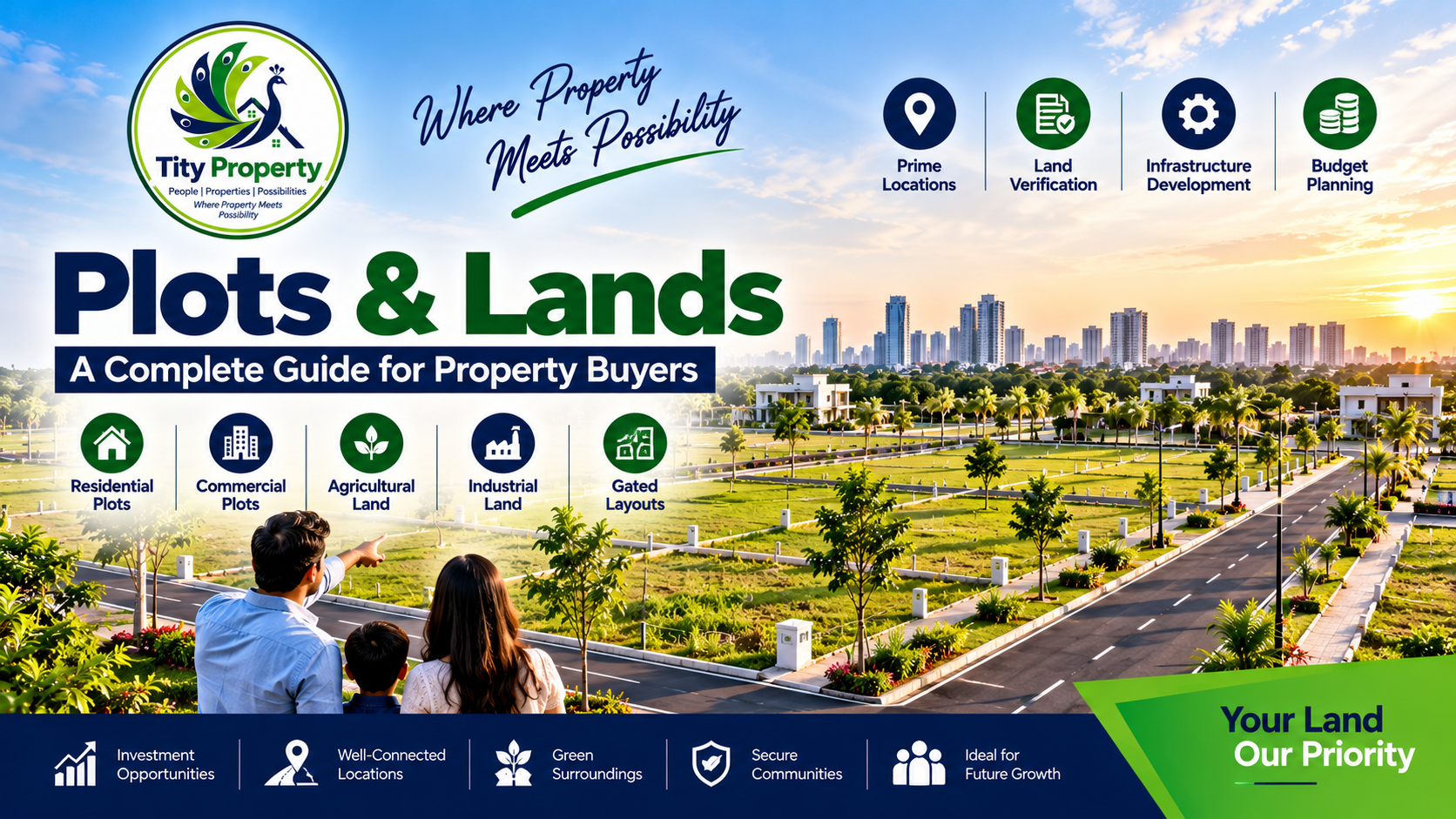
Plots and Lands: A Complete Guide for Property Buyers
Purchasing a plot or land can be an important step toward building a home, developing a property, or exploring real estate opportunities. However, land purchases require careful evaluation because ownership records, permitted land use, access roads, infrastructure, and development restrictions can vary significantly between properties.
Whether you are planning to construct a house, purchase a residential plot, or evaluate land for a future project, understanding the property's legal status and practical suitability is essential.
At Tity Property, we help buyers explore property opportunities according to their requirements, preferred locations, and budgets.
1. Understanding Plots and Land
A plot generally refers to a defined parcel of land that may be intended for residential, commercial, industrial, or other permitted uses.
Land can be classified in different ways depending on its location, legal status, planning regulations, and intended purpose.
Before purchasing any plot, buyers should understand the property's classification, ownership structure, permitted use, and applicable development conditions.
A property advertised as a residential plot should not automatically be assumed to have all the approvals required for construction. Buyers must verify the relevant records with the appropriate authorities.
2. Different Types of Plots and Land
Understanding the different categories can help buyers identify properties that match their requirements.
Residential Plots
Residential plots are intended for residential development, subject to applicable planning permissions and building regulations.
Buyers considering a residential plot should verify the approved layout, permitted construction, road access, utility availability, and ownership documents.
Commercial Plots
Commercial plots may be intended for business establishments, offices, retail developments, or other commercial activities, depending on the permitted land use.
Before purchasing, verify zoning regulations, access, infrastructure, and the approvals required for the proposed development.
Agricultural Land
Agricultural land is generally associated with farming and related permitted activities.
The purchase, transfer, conversion, and development of agricultural land may be subject to specific state laws and restrictions. Buyers should obtain professional legal advice and verify the applicable requirements before proceeding.
Industrial Land
Industrial land may be designated for manufacturing, warehousing, logistics, or related activities, depending on the applicable zoning and approvals.
Buyers should examine infrastructure, transportation access, utility requirements, environmental restrictions, and permitted activities.
Open Plots in Gated Layouts
Some residential developments offer individual plots within planned layouts that may include internal roads, drainage systems, street lighting, and other infrastructure.
The availability of these facilities and the legal status of the layout must be independently verified.
Investment-Oriented Land
Some buyers consider land for potential future use or long-term ownership.
Such decisions require careful assessment of the purchase price, legal status, location, holding costs, liquidity, and possible restrictions. Future appreciation is not guaranteed.
3. Choosing the Right Location
Location is an important consideration when purchasing a plot because it affects accessibility, development feasibility, and suitability for the intended purpose.
Before selecting a property, evaluate the following factors:
- Road Connectivity: Check access to existing roads and transportation routes.
- Neighbourhood Development: Assess the surrounding area and existing development.
- Essential Infrastructure: Verify electricity, water supply, drainage, and other required services.
- Employment and Business Centres: Consider accessibility to relevant commercial or employment areas.
- Educational and Healthcare Facilities: Evaluate nearby schools, colleges, hospitals, and clinics where relevant.
- Land Use: Confirm that the property's permitted use matches your plans.
- Physical Characteristics: Assess the land's shape, dimensions, slope, and drainage.
- Accessibility: Confirm that the property has legally recognized and practical access.
- Official Development Plans: Review relevant plans and notifications issued by the appropriate authorities.
If you are exploring land opportunities in Hyderabad or other locations, compare different areas based on your intended use, budget, and infrastructure requirements.
Do not rely solely on verbal assurances about upcoming roads, proposed infrastructure, or future development. Verify such information through official sources.
4. Understanding Plot Size and Dimensions
The size and shape of a plot can influence its usability and suitability for construction.
Before purchasing, verify the plot's dimensions and area against the relevant ownership documents and approved layout records.
Consider the following:
Plot Area: Confirm the total land area stated in the documents.
Frontage: Evaluate the width of the plot facing the access road.
Depth: Understand the distance from the front boundary to the rear boundary.
Shape: Check whether the plot is regular or irregular and how its shape affects practical use.
Road Width: Verify the width and legal status of the access road.
Boundaries: Confirm the property's boundaries and whether they match the records.
Setback Requirements: Check the applicable building setback rules before planning construction.
Drainage and Slope: Assess whether the land requires filling, leveling, or drainage improvements.
A plot with a suitable area may still be difficult to develop if its dimensions, access, or planning restrictions do not match the intended project.
5. Legal Verification Before Buying Land
Legal due diligence is one of the most important stages of a land purchase.
Buyers should verify the seller's ownership rights, the property's legal status, applicable approvals, and any restrictions that could affect the transaction.
Depending on the location and type of land, relevant records may include:
- Title deed and ownership documents
- Previous title documents and ownership history
- Encumbrance Certificate, where applicable
- Relevant revenue records
- Survey records and land measurements
- Approved layout plans, where applicable
- Land-use classification and zoning records
- Applicable land conversion permissions
- Property tax or other relevant payment records
- Records relating to existing mortgages or legal claims
- Access rights and easement documents, where applicable
- Relevant permissions or no-objection certificates, where required
The exact documents vary according to the property's location, classification, and legal circumstances.
For land within a planned development, verify the layout approval and the status of the infrastructure promised by the developer.
Important: Consult a qualified property lawyer to examine ownership records, legal restrictions, approvals, and other relevant matters before entering into a binding transaction.
6. Checking Layout Approvals and Development Permissions
A plot's location within a layout does not, by itself, establish that the layout has all the necessary approvals.
Buyers should independently verify the relevant planning permissions and development records.
Check the following where applicable:
- Approval from the competent planning authority
- Approved layout plan
- Permitted land use
- Road access and road reservations
- Open spaces and designated public areas
- Drainage and infrastructure provisions
- Applicable development restrictions
- Building permission requirements
- Conditions attached to the approval
If a property is marketed as an approved layout, ask for the relevant approval details and verify them with the issuing authority.
Do not assume that a registration document alone proves that a plot is approved for every intended use.
7. Evaluating Infrastructure and Essential Services
Infrastructure can significantly affect the practical usability of a plot.
Before purchasing, examine the availability and condition of essential services.
Roads: Check whether the roads are completed, accessible, and legally recognized.
Water Supply: Verify the availability and reliability of water sources.
Electricity: Understand the availability of connections and any additional connection requirements.
Drainage: Assess the drainage arrangements and the possibility of waterlogging.
Street Lighting: Check whether lighting is available in the layout and surrounding area.
Public Transportation: Consider access to bus routes, railway stations, or other transport facilities.
Internet and Communication: Verify connectivity where it is important for your intended use.
Site Conditions: Inspect the land for slope, soil conditions, drainage issues, and other physical limitations.
If infrastructure is still under development, obtain written details about the developer's commitments and verify the current status before making a decision.
8. Setting a Budget for a Plot or Land Purchase
The total cost of purchasing land includes more than the advertised selling price.
Your budget should account for:
- Plot or land purchase price
- Applicable stamp duty and registration charges
- Legal verification fees
- Survey and measurement expenses
- Brokerage charges, where applicable
- Applicable taxes and statutory fees
- Land leveling and site preparation
- Boundary wall or fencing expenses
- Utility connection costs
- Applicable maintenance or development charges
- Loan processing costs, if financing is used
Additional expenses may arise if the property requires access improvements, soil assessment, drainage work, or other preparation before development.
Ask for a complete cost breakdown and verify which charges are included in the quoted price.
A realistic budget helps you compare properties fairly and avoid unexpected financial commitments.
9. Residential Plot vs. Ready-Built Property
Some buyers choose between purchasing land and purchasing an existing home.
Both options have advantages and considerations.
| Factor | Residential Plot | Ready-Built Property |
|---|---|---|
| Customization | May offer flexibility to build according to approved plans | Existing layout may limit customization |
| Construction Timeline | Construction and approvals may take additional time | Property may be available for occupation, subject to its status |
| Initial Expenses | Includes land purchase and any subsequent development costs | Includes property purchase and applicable additional costs |
| Construction Responsibility | Buyer generally manages construction if building a home | Existing construction is already in place |
| Legal Verification | Requires verification of land title, classification, and applicable approvals | Requires verification of ownership, building approvals, and other records |
| Maintenance | Land maintenance and site security may be necessary | Building maintenance and repairs may be necessary |
| Suitability | Can suit buyers planning their own development | Can suit buyers seeking an existing residential structure |
The right choice depends on your budget, timeline, construction plans, and willingness to manage the development process.
10. Understanding Land Purchase Risks
Land purchases can involve risks that are not always immediately visible during a site visit.
Buyers should be aware of the following:
Ownership Disputes
Verify the title and ownership history to identify possible disputes or competing claims.
Encumbrances
Check for mortgages, charges, or other registered interests that may affect the transaction.
Unauthorized Layouts
Verify the layout approval and the legal status of the plot.
Land-Use Restrictions
Confirm that the proposed use is permitted under the applicable planning regulations.
Boundary Disputes
Compare the survey measurements, documents, and physical boundaries.
Access Problems
Verify that the property has legally recognized access and that the route is practically usable.
Unverified Development Claims
Do not rely solely on statements about future infrastructure or development.
Unclear Payment Terms
Review the sale agreement, payment schedule, and refund or cancellation provisions where applicable.
Professional legal and technical verification can help buyers identify potential issues before committing to a purchase.
11. Can Land Be a Long-Term Investment?
Some buyers consider land for long-term ownership, future construction, or other permitted uses.
However, land should not be purchased on the assumption that its value will automatically increase.
Before considering land as an investment, evaluate:
- The purchase price relative to comparable properties
- Legal status and development approvals
- Accessibility and existing infrastructure
- Applicable holding costs and taxes
- Demand for the intended land use
- Potential development restrictions
- The ability to resell the property
- The time and costs associated with holding the land
Land can be less liquid than some other property types, meaning that selling it quickly at a preferred price may not always be possible.
Actual market values depend on location, demand, infrastructure, regulations, and broader economic conditions.
Buyers should conduct independent due diligence and seek professional financial advice where appropriate.
12. Common Mistakes to Avoid When Buying a Plot
Avoid these common mistakes when evaluating a land purchase.
1. Failing to Verify Ownership
Always review the title documents and relevant ownership records.
2. Assuming Every Plot Is Construction-Ready
Verify the land classification, layout approval, and building permission requirements.
3. Ignoring Access Roads
Confirm legal access and assess the condition of the approach road.
4. Relying Only on Future Development Claims
Verify official infrastructure plans instead of relying on promotional statements.
5. Overlooking Boundary Measurements
Confirm the dimensions and boundaries through appropriate records and surveys.
6. Ignoring Additional Expenses
Account for registration, legal checks, site preparation, and other applicable charges.
7. Paying Before Completing Due Diligence
Avoid making substantial payments before completing the necessary legal and technical checks.
8. Skipping Professional Advice
Engage qualified professionals when reviewing complex ownership or land-use matters.
13. How Tity Property Helps You Explore Plot and Land Opportunities
Finding a suitable plot requires comparing locations, land classifications, prices, access, infrastructure, and legal documentation.
Tity Property helps buyers explore property opportunities based on their requirements and preferences.
Whether you are searching for a residential plot, exploring commercial land, or evaluating land for a specific permitted purpose, you can share your requirements to begin exploring available opportunities.
Our property assistance is designed to help buyers navigate the search process and identify properties worth evaluating.
Before proceeding with a transaction, buyers should independently verify ownership, layout approvals, permitted land use, infrastructure details, and all applicable legal requirements.
Why Explore Land Opportunities with Tity Property?
- Explore plots based on your preferred location.
- Consider properties that align with your intended use.
- Compare available options according to your budget.
- Review important property details before making a decision.
- Seek assistance in navigating your property search.
Property availability and suitability depend on the buyer's requirements and the properties available at the time of enquiry.
Conclusion
Purchasing a plot or land requires careful planning, thorough legal verification, and a clear understanding of the property's permitted use.
By evaluating location, infrastructure, land dimensions, ownership documents, development permissions, and total costs, buyers can make more informed property decisions.
Whether you plan to build a home, develop a permitted project, or explore long-term property ownership, proper due diligence should always come before a purchase commitment.
Tity Property — People | Properties | Possibilities
Where Property Meets Possibility.