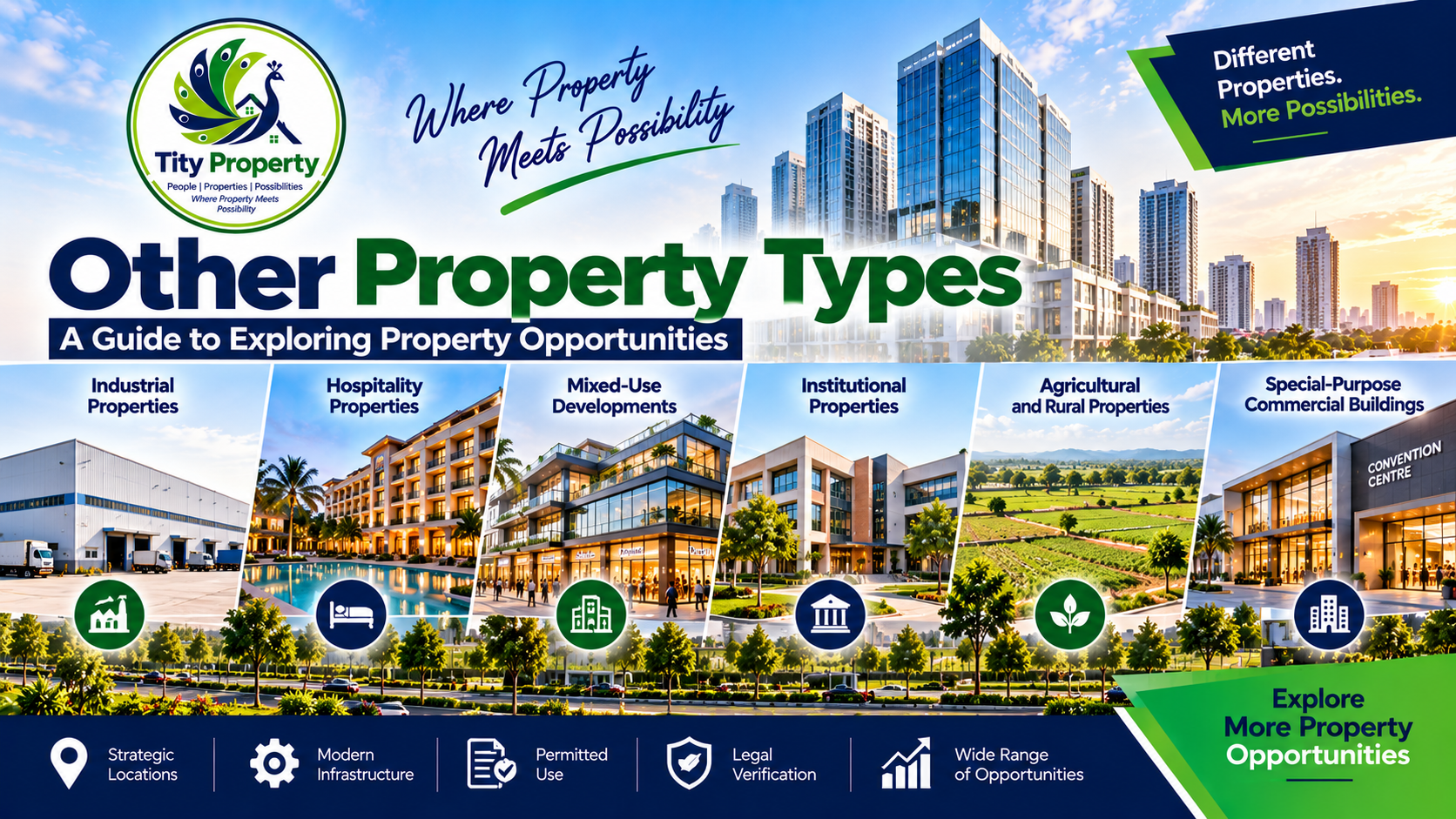
Other Property Types: A Guide to Exploring Property Opportunities
Real estate offers a wide range of property opportunities beyond conventional residential homes and commercial offices. Depending on their requirements, buyers and businesses may explore industrial buildings, hospitality properties, mixed-use developments, institutional buildings, and other specialized properties.
Each property type serves a different purpose and comes with its own considerations relating to location, infrastructure, permitted usage, maintenance, and legal compliance.
Whether you are searching for a property for business operations, planning to purchase a specialized building, or exploring different real estate options, understanding the characteristics of each property type can help you make informed decisions.
At Tity Property, we help buyers and businesses explore property opportunities according to their requirements, preferred locations, and budgets.
1. Understanding Different Property Types
Properties are designed for different purposes, and their suitability depends on how they can legally and practically be used.
For example, a building suitable for residential occupation may not automatically be suitable for commercial operations. Similarly, an industrial property may require specific permissions, infrastructure, and safety arrangements.
Before selecting a property, identify its intended purpose and verify the applicable land-use classification, building approvals, and operational requirements.
Understanding these factors at the beginning can help you narrow your options and avoid unsuitable properties.
2. Different Types of Specialized Properties
The following property categories offer different possibilities for individuals, businesses, and property buyers.
A. Industrial Properties
Industrial properties may be used for manufacturing, assembly, processing, equipment storage, and other permitted industrial activities.
Depending on the property, facilities may include production areas, loading zones, storage sections, utility infrastructure, and administrative offices.
Before purchasing or leasing an industrial property, evaluate:
- Permitted industrial activities
- Location and transportation connectivity
- Building specifications and floor capacity
- Electricity and utility requirements
- Loading and unloading facilities
- Fire safety and environmental compliance
- Applicable industrial permissions
- Maintenance and operational costs
The property must be suitable for the specific industrial activity planned by the business.
B. Hospitality Properties
Hospitality properties include buildings and facilities designed for accommodation, guest services, and related activities.
Examples may include hotels, guest houses, serviced accommodation facilities, and other permitted hospitality developments.
Important considerations include:
- Accessibility and location
- Guest accommodation requirements
- Building layout and facilities
- Parking and service access
- Water and electricity availability
- Fire safety arrangements
- Applicable operating licences
- Maintenance and staffing requirements
Buyers should verify the property's permitted use and assess whether the building is suitable for the intended hospitality operation.
C. Mixed-Use Developments
Mixed-use developments combine two or more permitted property uses within a development or building.
For example, a project may include residential units, retail shops, offices, and other commercial facilities.
These developments can provide access to different services within a shared environment.
Before purchasing a property in a mixed-use development, review:
- Approved project plans
- Permitted uses of individual units
- Access and parking arrangements
- Common-area maintenance responsibilities
- Building management rules
- Utility arrangements
- Applicable legal approvals
The permitted use of each unit should be independently verified rather than assumed from the overall project description.
D. Institutional Properties
Institutional properties may be designed for educational, healthcare, training, or other institutional activities, subject to applicable permissions.
Examples may include school buildings, training centres, healthcare facilities, and other specialized premises.
When evaluating an institutional property, consider:
- Location and accessibility
- Building layout and usable area
- Infrastructure and utility requirements
- Accessibility and safety features
- Parking and visitor arrangements
- Applicable institutional approvals
- Maintenance responsibilities
- Requirements specific to the intended activity
Specialized institutions may require additional permissions depending on the nature of their operations.
E. Agricultural and Rural Properties
Agricultural and rural properties may be considered for farming and other legally permitted land uses.
Their suitability depends on land classification, location, access, water availability, soil conditions, and applicable state regulations.
Before purchasing such a property, verify:
- Ownership and title records
- Land classification
- Survey details and boundaries
- Permitted use and applicable restrictions
- Water availability
- Road access
- Relevant revenue records
- Conversion requirements, where applicable
Agricultural land transactions can be subject to specific legal restrictions. Buyers should obtain qualified legal advice before proceeding.
F. Special-Purpose Commercial Buildings
Some properties are designed for specialized commercial activities rather than general retail or office use.
Examples may include exhibition facilities, event venues, entertainment premises, training facilities, and other purpose-built commercial buildings.
Before purchasing or leasing such a property, assess its suitability for the intended activity, building specifications, infrastructure, operational requirements, and applicable approvals.
A building designed for one commercial purpose may not automatically be suitable for another.
3. Choosing the Right Property for Your Requirements
The right property depends on the purpose for which you intend to use it.
Before beginning your search, identify the following requirements.
Intended Use
Determine whether the property will be used for business operations, manufacturing, accommodation, institutional activities, or another permitted purpose.
Location
Evaluate accessibility, transportation links, surrounding infrastructure, and proximity to relevant customers, employees, suppliers, or service providers.
Property Size
Estimate the usable area required for your activities, equipment, staff, storage, and other operational needs.
Infrastructure
Verify the availability of electricity, water, drainage, internet connectivity, parking, and other essential facilities.
Legal Suitability
Confirm that the property's permitted use matches your intended activity.
Budget
Calculate the purchase or rental cost, additional charges, setup expenses, and ongoing maintenance requirements.
Future Requirements
Consider whether the property can accommodate changes in your business operations or space requirements.
Clearly defining these factors can make your property search more efficient.
4. Understanding Location and Connectivity
Location plays an important role in determining whether a specialized property is suitable for its intended purpose.
Different property types require different location characteristics.
For example, an industrial facility may require convenient access for transport vehicles, while a hospitality property may depend on accessibility for guests.
When evaluating a location, consider:
- Road connectivity
- Public transportation
- Access for employees and visitors
- Proximity to relevant business areas
- Availability of essential services
- Water and electricity infrastructure
- Surrounding land uses
- Traffic and access conditions
- Officially announced infrastructure developments
Businesses exploring property opportunities in Hyderabad or other locations should compare different areas according to their operational requirements.
Verify location-related claims through reliable sources rather than relying solely on marketing descriptions.
5. Evaluating Building Quality and Infrastructure
The building's physical condition and infrastructure should match its intended use.
A property suitable for a general office may not provide the technical features required for manufacturing, healthcare, hospitality, or other specialized activities.
During a property inspection, evaluate:
- Structural condition
- Roof and waterproofing
- Flooring and load capacity
- Electrical infrastructure
- Water supply and drainage
- Ventilation and air conditioning
- Fire safety systems
- Loading and unloading access
- Parking facilities
- Accessibility arrangements
- Security systems
- Maintenance history
For specialized properties, consider hiring qualified technical professionals to assess the building and identify any additional work that may be required.
Do not assume that an attractive building or recently renovated interior automatically satisfies the technical and regulatory requirements of your intended activity.
6. Buying vs. Leasing Specialized Properties
Buyers and businesses can consider purchasing or leasing a specialized property.
The right option depends on the intended use, financial position, expected occupancy period, and operational requirements.
Buying a Property
Purchasing may suit buyers who require long-term control of a property and have sufficient capital or suitable financing.
Before purchasing, consider:
- Purchase price
- Applicable stamp duty and registration charges
- Legal verification costs
- Financing expenses, if applicable
- Building condition
- Required modifications
- Maintenance responsibilities
- Applicable property taxes and charges
- Long-term operational suitability
Ownership also involves responsibility for property maintenance and relevant legal obligations.
Leasing a Property
Leasing may suit businesses that need a facility without purchasing the building or land.
Before entering into a lease, review:
- Monthly rent
- Security deposit
- Lease duration
- Rent escalation terms
- Permitted use
- Maintenance responsibilities
- Fit-out permissions
- Insurance and liability provisions
- Renewal and termination clauses
- Restoration obligations
Ensure that the lease agreement permits the intended activity and clearly defines the responsibilities of the parties.
Compare the total costs of buying and leasing before making a decision.
7. Budgeting for Different Property Types
Specialized properties may involve additional costs depending on their design, condition, and intended use.
In addition to the purchase price or rent, consider:
- Applicable registration and stamp duty
- Legal and technical verification
- Brokerage charges, where applicable
- Renovation and fit-out
- Electrical upgrades
- Plumbing and drainage improvements
- Fire safety installations
- Equipment and machinery
- Utility connections
- Maintenance and service charges
- Property taxes, where applicable
- Insurance
- Operational licences and compliance expenses, where applicable
For properties that require specialized equipment or modifications, obtain estimates before finalizing the transaction.
A detailed budget should include both initial expenditure and recurring operating costs.
8. Legal Documents and Approvals to Verify
Legal verification is essential for every property transaction, particularly when the building has a specialized purpose.
Depending on the property and transaction, relevant documents may include:
- Title deed and ownership records
- Previous ownership documents, where relevant
- Encumbrance Certificate, where applicable
- Approved building plans
- Applicable occupancy or completion approvals
- Land-use classification and zoning records
- Property tax records
- Fire safety approvals, where required
- Environmental permissions, where applicable
- Existing mortgage or registered interests
- Sale agreement or lease agreement
- Relevant building association records
- Permissions required for the intended activity
Certain property categories may require additional sector-specific approvals, licences, or operating permissions.
Buyers should verify these requirements with the appropriate authorities and qualified professionals.
Important: Consult a qualified property lawyer before completing a transaction, particularly when ownership, land use, approvals, or permitted activities are complex.
9. Understanding the Risks of Specialized Properties
Specialized properties may involve considerations that differ from those associated with conventional residential or commercial buildings.
Potential issues include:
Restricted Permitted Use
A property may not be legally suitable for every proposed activity.
Specialized Infrastructure Requirements
The building may require technical upgrades or equipment before it can be used.
Higher Maintenance Requirements
Certain buildings may involve substantial maintenance or operational costs.
Regulatory Requirements
Some activities require additional permissions, safety measures, or licences.
Location Limitations
A property may be difficult to use if transportation, utilities, or access arrangements are inadequate.
Unexpected Renovation Costs
Existing defects or outdated infrastructure may require additional expenditure.
Contractual Restrictions
Lease agreements, ownership conditions, or association rules may restrict certain activities.
A careful assessment of these factors can help buyers identify potential challenges before committing to a property.
10. Common Mistakes to Avoid When Buying or Leasing Property
Avoid the following mistakes when exploring specialized property opportunities.
Choosing Without Defining the Intended Use
Identify your operational requirements before selecting a property.
Ignoring Legal Restrictions
Verify that the property can be used for the intended activity.
Underestimating Infrastructure Costs
Include the cost of required equipment, utility upgrades, and modifications.
Relying Only on Advertisements
Inspect the property and independently verify important claims.
Overlooking Maintenance Expenses
Understand recurring charges and likely repair requirements.
Failing to Compare Alternatives
Compare properties based on location, suitability, total cost, and legal status.
Signing Agreements Without Review
Understand the contractual terms and obtain professional advice where necessary.
11. How Tity Property Helps You Explore Property Opportunities
Finding a suitable specialized property requires a clear understanding of your requirements and careful evaluation of available options.
Tity Property helps buyers and businesses explore property opportunities according to their needs, preferred locations, and budgets.
Whether you are looking for an industrial building, hospitality property, mixed-use development, institutional premises, or another type of property, you can share your requirements to begin exploring available opportunities.
Our property assistance is designed to help buyers navigate their search and identify properties worth evaluating.
Before proceeding with any transaction, buyers should independently verify the property's availability, ownership documents, specifications, permitted use, approvals, and other applicable requirements.
Why Explore Property Opportunities with Tity Property?
- Explore properties based on your intended use.
- Consider options in preferred locations.
- Compare properties according to your budget.
- Evaluate infrastructure and space requirements.
- Review relevant property details before making a decision.
- Seek assistance in navigating your property search.
Property availability and suitability depend on your requirements and the properties available at the time of enquiry.
Conclusion
Real estate offers different property opportunities for residential, commercial, industrial, institutional, hospitality, and other specialized purposes.
Each property type requires careful evaluation of location, infrastructure, permitted use, budget, maintenance, and legal documentation.
By clearly defining your requirements and conducting appropriate due diligence, you can make a more informed decision when buying or leasing a specialized property.
Tity Property — People | Properties | Possibilities
Where Property Meets Possibility.