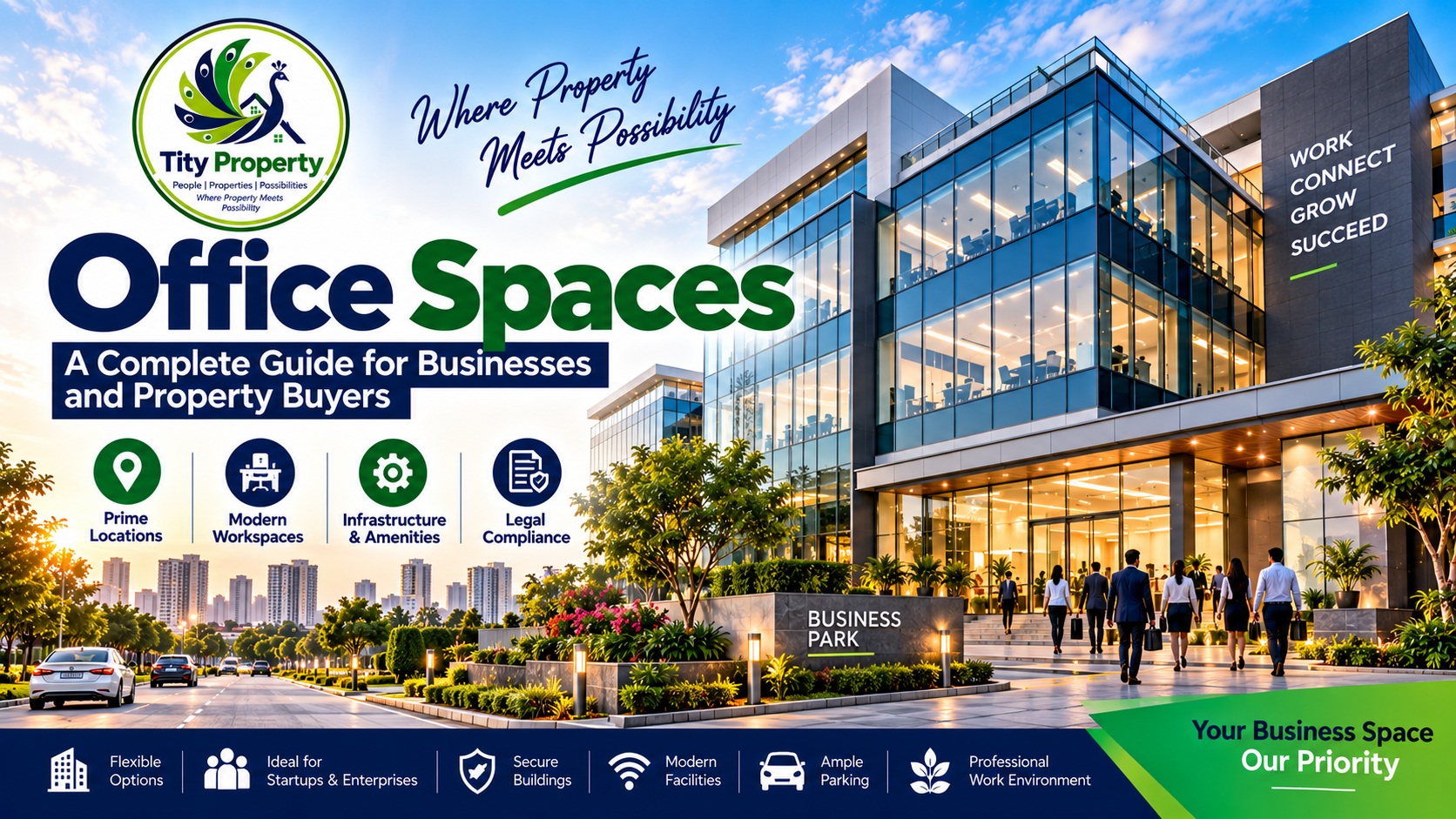
Office Spaces: A Complete Guide for Businesses and Property Buyers
Office space plays an important role in the daily operations, productivity, and professional identity of a business. Whether you are launching a startup, expanding an existing company, establishing a branch office, or searching for a commercial property to purchase, choosing the right workspace requires careful planning.
The right office should support your team's requirements, provide convenient access for employees and clients, and fit within your financial plans.
However, selecting office space involves more than comparing rental prices or building appearances. Businesses must also evaluate location, accessibility, infrastructure, workspace configuration, maintenance costs, legal permissions, and future operational requirements.
At Tity Property, we help businesses and property buyers explore commercial property opportunities according to their requirements, preferred locations, and budgets.
1. What Is Commercial Office Space?
Commercial office space refers to a property designed or approved for business and professional activities.
It may be used by startups, IT companies, consulting firms, financial services businesses, corporate teams, professional service providers, and other organizations whose activities are permitted at the location.
Office properties are available in different formats, from small private offices to large corporate floors in commercial buildings.
Depending on the property, office facilities may include meeting rooms, reception areas, workstations, conference rooms, parking, elevators, security systems, and shared amenities.
Before selecting an office, businesses should verify that the property's permitted use is appropriate for their intended operations.
2. Different Types of Office Spaces
Understanding the available office formats can help businesses identify a suitable workspace.
Private Offices
Private offices provide dedicated working areas for individuals, teams, or businesses.
They may be suitable for professional services, small companies, and organizations that require a separate working environment.
Shared Office Spaces
Shared office spaces allow multiple businesses or professionals to use facilities within the same premises.
Depending on the arrangement, these spaces may offer shared workstations, meeting rooms, internet connectivity, and common amenities.
Businesses should review the agreement, privacy arrangements, access rules, and additional charges before choosing this option.
Coworking Spaces
Coworking spaces provide flexible work environments used by individuals, freelancers, startups, and small teams.
They may offer flexible membership plans, shared workstations, meeting rooms, and common facilities.
Coworking arrangements can be useful for businesses that need workspace without committing to a conventional office lease.
Conventional Office Spaces
Conventional office spaces generally provide a dedicated unit or floor for a business.
They may suit organizations that require a defined workspace, control over the office layout, or a longer-term operating location.
Grade A Commercial Offices
Grade A office buildings generally represent a higher category of commercial office facilities based on factors such as building quality, location, infrastructure, and available services.
The exact meaning of this classification can vary by market. Buyers and tenants should evaluate the building's actual specifications rather than relying solely on its advertised grade.
Managed Offices
Managed offices may provide furnished workspaces with certain operational services, depending on the agreement.
These arrangements can reduce the need for businesses to coordinate every aspect of office setup independently.
Before signing, clarify which services are included, the applicable fees, and the responsibilities of the service provider and occupant.
3. Choosing the Right Office Location
Location is one of the most important factors when selecting office space.
A suitable location can improve employee convenience, support client access, and make business operations easier to manage.
Consider these factors before choosing a property.
Connectivity: Evaluate access to major roads, public transportation, and important travel routes.
Employee Accessibility: Consider commuting options and travel times for your team.
Client Convenience: Choose a location that is reasonably accessible to customers, partners, and visitors.
Nearby Business Centres: Evaluate proximity to relevant commercial districts, industry clusters, and business services.
Parking Facilities: Check whether sufficient parking is available for employees and visitors.
Essential Services: Consider nearby banks, restaurants, food facilities, healthcare services, and other daily conveniences.
Building Environment: Assess the surrounding area, traffic conditions, noise levels, and general accessibility.
Future Business Requirements: Consider whether the location will remain suitable as your workforce and operational needs change.
Businesses exploring office spaces in Hyderabad or other commercial markets should compare different business districts based on their industry, budget, employee locations, and client requirements.
Do not select a property solely because it is advertised as a premium business location. Evaluate its actual accessibility and suitability for your operations.
4. Understanding Office Size and Workspace Layout
The size and configuration of an office directly affect how effectively a business can use the available space.
An office that is too small may limit team activities, while an unnecessarily large office can increase occupancy costs.
Before selecting a property, evaluate:
- Total usable workspace
- Number of employees
- Workstation requirements
- Private cabins
- Meeting and conference rooms
- Reception and visitor areas
- Storage facilities
- Pantry or break areas
- Employee circulation space
- Restroom facilities
- Server or equipment rooms, where required
- Future expansion requirements
Businesses should distinguish between the advertised area and the usable area available for their actual operations.
Ask the property owner or developer to explain how the area is measured and what common spaces or other areas are included in the quoted figures.
A practical layout should support daily activities while allowing employees to work comfortably.
5. Essential Infrastructure and Office Amenities
A suitable office should have the infrastructure required for the business to function efficiently.
Depending on your operations, assess the following features.
Electricity and Power Backup
Verify the available electrical capacity and whether backup power is provided for the facilities your business needs.
Internet Connectivity
Check the availability of reliable internet services and the possibility of obtaining the required connection.
Air Conditioning and Ventilation
Evaluate the building's ventilation, cooling systems, and maintenance arrangements.
Elevators and Accessibility
For offices in multi-storey buildings, assess elevator capacity, accessibility, and operating arrangements.
Security
Review building access controls, visitor management, surveillance systems, and other relevant security measures.
Parking
Understand the number of parking spaces available and any additional charges.
Fire Safety
Verify the applicable fire safety arrangements, emergency exits, and relevant approvals.
Common Facilities
Depending on the building, facilities may include meeting rooms, reception areas, cafeterias, restrooms, and shared recreational spaces.
Maintenance Services
Clarify who is responsible for cleaning, repairs, equipment maintenance, and common-area upkeep.
Not every business needs every facility. Focus on the infrastructure that supports your specific operations.
6. Buying vs. Leasing Office Space
Businesses can acquire office space through purchase or lease arrangements.
The right option depends on the company's financial position, operational stability, long-term plans, and workspace requirements.
Buying Office Space
Purchasing office property may suit businesses that intend to occupy the premises for an extended period and have sufficient capital or suitable financing.
Factors to evaluate include:
- Purchase price
- Applicable stamp duty and registration charges
- Legal verification expenses
- Financing costs, if applicable
- Maintenance responsibilities
- Property taxes and other applicable charges
- Renovation and furnishing expenses
- Long-term suitability of the location
Ownership also involves responsibility for property-related expenses, repairs, and applicable compliance requirements.
Leasing Office Space
Leasing allows a business to occupy commercial premises according to the terms of a lease agreement.
It may suit businesses that prefer not to commit substantial capital to purchasing property.
Before leasing, evaluate:
- Monthly rent
- Security deposit
- Lease duration
- Rent escalation clauses
- Maintenance and service charges
- Fit-out permissions
- Renewal and termination conditions
- Restoration obligations
- Parking and utility charges
Review the agreement carefully and confirm that the property can legally be used for the intended business activity.
Neither option is universally better. Compare the total costs and operational implications before making a decision.
7. Budgeting for Office Space
The total cost of occupying an office includes more than the advertised purchase price or monthly rent.
Depending on the property and arrangement, expenses may include:
- Purchase price or rental deposit
- Monthly rent or loan repayments
- Applicable registration and stamp duty
- Brokerage fees, where applicable
- Legal verification expenses
- Interior design and fit-out
- Furniture and workstations
- Computer and communication infrastructure
- Internet and utility charges
- Maintenance and service charges
- Parking fees
- Insurance, where applicable
- Property taxes, where applicable
- Repairs and equipment maintenance
For furnished or managed offices, ask for a detailed explanation of the services included in the quoted price.
Businesses should also estimate the ongoing cost of operating the office rather than focusing only on the initial setup expense.
Preparing a realistic budget can help you compare available properties more accurately.
8. Legal Documents and Compliance to Verify
Legal verification is essential when purchasing or leasing commercial office space.
The documents required depend on the property's location, ownership structure, building status, and intended use.
Relevant checks may include:
- Title deed and ownership records
- Previous ownership documents, where relevant
- Encumbrance Certificate, where applicable
- Approved building plans
- Applicable building and occupancy approvals
- Permitted land use and zoning
- Property tax records
- Fire safety approvals, where required
- Relevant utility records
- Existing mortgage or registered interests, where applicable
- Sale agreement or lease agreement
- Building association or maintenance-related documents
- Permissions required for the intended business activity
For leased premises, verify the landlord's authority to lease the property and confirm that the agreement permits your intended operations.
Businesses planning specialized activities should also verify any additional regulatory, safety, or operational requirements.
Important: Consult a qualified property lawyer to verify the relevant documents, contractual terms, ownership status, and applicable permissions before completing the transaction.
9. Office Space for Startups and Growing Businesses
Startups and growing businesses often need to balance workspace requirements with limited budgets and changing team sizes.
A suitable office should support current operations without creating unnecessary financial pressure.
Consider these options:
Coworking Spaces: May suit individuals, early-stage startups, and small teams seeking flexible arrangements.
Small Private Offices: May provide a dedicated workspace for businesses that need privacy and regular team collaboration.
Managed Offices: May be useful for companies that prefer a workspace with selected services included.
Conventional Leased Offices: May suit businesses with more stable occupancy requirements and specific layout preferences.
Purchased Office Properties: May be worth evaluating for businesses with appropriate capital and long-term property requirements.
Before deciding, estimate the number of employees, workspace needs, expected operating costs, and possible changes in team size.
Avoid committing to a larger office than your business can reasonably use or afford.
10. Evaluating Office Space for Long-Term Business Use
An office should support your current operations while remaining suitable for your foreseeable business needs.
Before finalizing a property, consider:
- Whether the location is accessible to employees and clients
- Whether the layout supports your work processes
- Whether the available infrastructure meets your requirements
- Whether the office can accommodate your expected workforce
- Whether expansion or reconfiguration is possible
- Whether the total cost fits your financial plan
- Whether the building has suitable maintenance arrangements
- Whether the property meets applicable legal and regulatory requirements
If your business depends on specialized equipment, sensitive information, or specific technical systems, assess the relevant building requirements before signing an agreement.
A careful assessment can help reduce the likelihood of needing to relocate prematurely.
11. Common Mistakes to Avoid When Choosing Office Space
Businesses and property buyers should avoid the following mistakes.
Choosing Only on Rental Price
A lower rent may not compensate for poor connectivity, inadequate infrastructure, or high additional charges.
Ignoring Employee Accessibility
Consider commuting convenience and the location's accessibility for your team.
Underestimating Fit-Out Costs
Account for furniture, workstations, electrical changes, internet infrastructure, and other setup expenses.
Overlooking Hidden Charges
Clarify maintenance fees, parking charges, utility costs, and applicable service charges.
Failing to Verify Legal Permissions
Confirm that the premises can be used for the intended business activities.
Ignoring Lease Conditions
Review escalation clauses, renewal terms, termination conditions, and responsibilities for repairs.
Selecting an Unsuitable Layout
Ensure that the available space supports your actual workflow and employee requirements.
Failing to Plan for Future Needs
Consider how the property will accommodate changes in workforce size or business operations.
12. How Tity Property Helps You Explore Office Space Opportunities
Finding the right office property requires comparing locations, workspace configurations, infrastructure, costs, and legal requirements.
Tity Property helps businesses and property buyers explore commercial property opportunities according to their requirements and preferences.
Whether you are looking for a small office for a startup, a dedicated workspace for a growing team, a corporate office, or commercial property for purchase, you can share your requirements to begin exploring available opportunities.
Our property assistance is designed to help businesses navigate their search and identify properties worth evaluating.
Before purchasing or leasing a property, businesses should independently verify availability, specifications, ownership documents, permitted use, and applicable compliance requirements.
Why Explore Office Properties with Tity Property?
- Explore office spaces in preferred locations.
- Consider properties based on your team size and operational needs.
- Compare available options according to your budget.
- Evaluate workspace layouts and infrastructure.
- Seek assistance in navigating your commercial property search.
Property availability and suitability depend on your requirements and the properties available at the time of enquiry.
Conclusion
Choosing the right office space is an important business decision that requires careful consideration of location, layout, infrastructure, budget, and legal compliance.
By understanding your operational needs and comparing available properties systematically, you can make a more informed decision about buying or leasing office space.
Whether you are establishing a startup office, expanding your business, or exploring commercial property opportunities, begin with a clear understanding of your requirements and long-term plans.
Tity Property — People | Properties | Possibilities
Where Property Meets Possibility.